
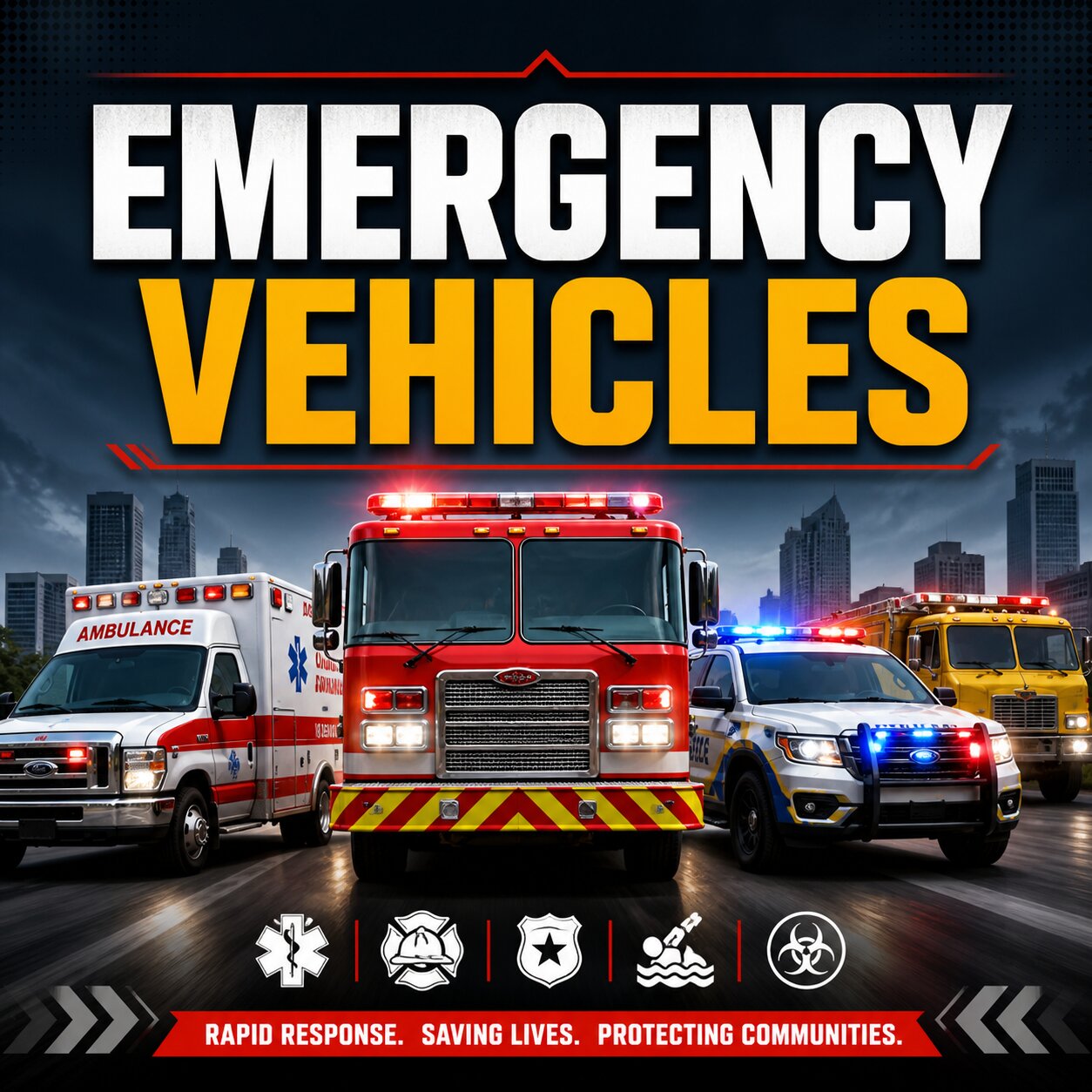
Emergency vehicles are specialised machines designed to respond rapidly to critical situations where time, safety, and precision are essential. From ambulances and fire engines to police units and disaster response fleets, these vehicles play a vital role in protecting lives and maintaining order.
Built for speed, durability, and advanced functionality, emergency vehicles operate across urban, rural, and hazardous environments. In South Africa and around the world, they form the frontline of response systems, ensuring that emergencies are handled quickly and effectively.
The Role Of Emergency Vehicles In Public Safety
Emergency vehicles are central to public safety systems, enabling rapid response to accidents, medical emergencies, fires, and security threats. Their ability to reach affected areas quickly often determines the outcome of critical situations.
Medical response vehicles provide life-saving care during transport, stabilising patients before they reach healthcare facilities. Fire rescue units respond to fires, rescues, and hazardous incidents, protecting both people and property.
Law enforcement vehicles support policing efforts, maintaining order and responding to incidents ranging from routine patrols to high-risk situations. In times of crisis, these vehicles ensure that authorities can act swiftly and decisively.
Disaster relief and hazard control vehicles extend this capability further, operating in extreme conditions such as floods, wildfires, and industrial accidents. Together, these systems form a coordinated network designed to protect communities.
How Emergency Vehicles Are Grouped By Function
Emergency vehicles are typically classified based on their specific response roles within safety and rescue operations. Each category is designed to handle a particular type of emergency with specialised equipment and capabilities.
Medical response vehicles focus on patient care and transport, equipped with advanced medical systems to support emergency treatment. Fire rescue vehicles are built for firefighting, rescue operations, and handling dangerous environments.
Law enforcement vehicles prioritise mobility, communication, and tactical response. Disaster relief units are designed for large-scale emergencies, often equipped to operate in unstable or heavily damaged environments.
Hazard control vehicles deal with chemical, biological, and environmental risks, requiring specialised containment and safety systems. Autonomous emergency vehicles are also beginning to emerge, introducing new possibilities for faster and more efficient response operations.
Technology Driving Modern Emergency Vehicles
Emergency vehicles have advanced significantly with the integration of modern technology. These innovations focus on improving response times, enhancing safety, and increasing operational efficiency.
Many emergency vehicles now feature real-time communication systems, GPS tracking, and advanced navigation tools that allow teams to reach incidents faster and more accurately. These systems also enable better coordination between multiple response units.
Safety technology has also improved, with reinforced structures, specialised equipment, and advanced warning systems helping protect both responders and the public. Lighting, sirens, and visibility features ensure that emergency vehicles can operate effectively in high-pressure environments.
Looking ahead, automation and smart systems are set to play a larger role. Autonomous emergency vehicles, AI-assisted dispatch systems, and connected infrastructure are shaping the future of emergency response.
Explore Emergency Vehicle Categories
Emergency vehicles cover a wide range of specialised categories, each designed to handle specific types of incidents and response scenarios:
- Medical response vehicles
- Fire rescue vehicles
- Law enforcement vehicles
- Disaster relief vehicles
- Hazard control vehicles
- Autonomous emergency vehicles
Each category represents a critical component of the emergency response system, working together to ensure rapid, effective, and coordinated action in times of need.
Understanding The Future Of Emergency Response Systems
Emergency vehicles will continue to evolve as technology advances and the demand for faster, more efficient response systems grows. The integration of smart technologies, improved communication networks, and automation is transforming how emergencies are managed.
Sustainability is also becoming a key focus, with electric and hybrid emergency vehicles being introduced to reduce environmental impact while maintaining performance. These innovations are helping create more resilient and adaptable response systems.
For readers exploring emergency vehicles, this category provides a gateway to understanding the systems that protect communities every day. Browse the emergency blocks below to discover how each vehicle type contributes to modern safety and response networks.


