
How Motorcycle Brake Cooling Improves Racing Performance
Professional motorcycle racing places extraordinary demands on braking systems, particularly when riders repeatedly decelerate from high speeds before entering tight corners. Effective motorcycle brake cooling helps manage the intense heat generated during these manoeuvres while maintaining predictable braking performance. Without appropriate temperature management, braking efficiency can deteriorate throughout a race. Engineers must therefore develop systems that balance heat dissipation with the operating requirements of different braking materials.
How Motorcycle Brake Cooling Works
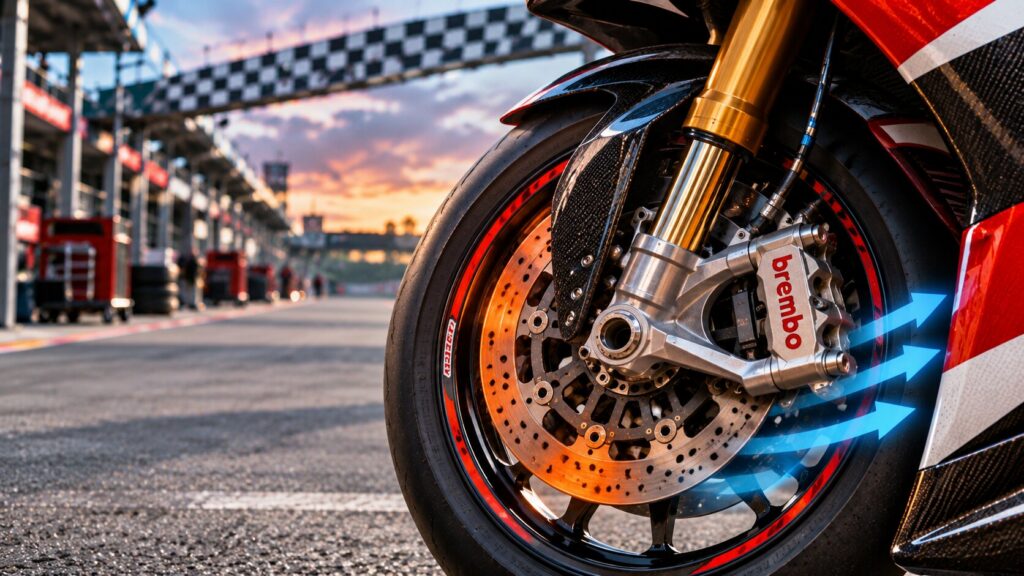
When a rider applies the brakes, friction between the brake pads and discs converts kinetic energy into thermal energy. Motorcycle brake cooling allows this accumulated heat to dissipate through airflow, radiation and heat transfer between components. The faster a motorcycle travels, the greater the potential for surrounding airflow to assist this process.
Racing engineers carefully consider brake disc dimensions, material composition and exposure to moving air. Certain braking systems incorporate specialised cooling fins that increase the surface area available for heat exchange. These features help control temperatures during demanding racing conditions.
Why Racing Motorcycle Brakes Generate Extreme Heat
Racing motorcycles repeatedly accelerate and decelerate as riders navigate straights, corners and technical sections. Each heavy braking event introduces additional thermal energy into the braking system, sometimes before the heat from previous corners has sufficiently dissipated. Motorcycle brake cooling becomes particularly important on circuits featuring several consecutive heavy braking zones.
As discussed in our guide to how racing motorcycles differ from road bikes, competition machines feature specialised components designed for demanding operating conditions. Their braking systems are no exception, with professional teams selecting equipment according to circuit characteristics. Ambient temperatures, racing speeds and individual riding styles can also influence thermal management requirements.
Carbon Brake Discs and Motorcycle Brake Cooling
MotoGP motorcycles commonly use carbon brake discs capable of operating at considerably higher temperatures than conventional steel alternatives. However, these components require sufficient heat before delivering effective braking performance. Motorcycle brake cooling must therefore maintain an appropriate temperature range rather than simply removing as much heat as possible.
According to Brembo’s explanation of finned racing brake discs, specialised ventilation fins improve thermal management by increasing the available heat exchange surface. These carbon discs are engineered around an operating range of approximately 250°C to 850°C. Such temperature requirements illustrate why professional racing brakes are unsuitable for ordinary road use.
Five Important Benefits of Motorcycle Brake Cooling
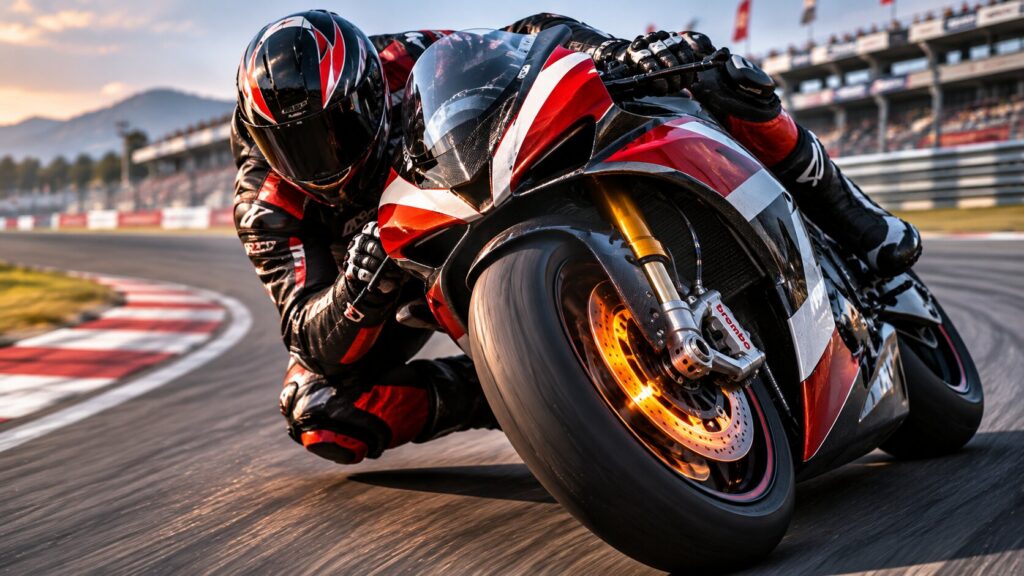
Maintaining suitable brake temperatures contributes to several aspects of competitive motorcycle performance. Teams must consider how thermal management affects both mechanical reliability and the rider’s confidence throughout a race. Effective cooling can deliver the following benefits:
- Reduced Brake Fade: Appropriate temperature management helps prevent excessive reductions in braking effectiveness.
- Consistent Braking Performance: Stable operating temperatures contribute to more predictable braking responses.
- Improved Component Durability: Limiting excessive thermal stress can help reduce premature component deterioration.
- Greater Rider Confidence: Predictable braking behaviour allows riders to approach corners with greater confidence.
- Better Race Consistency: Effective heat management helps maintain performance throughout demanding racing sessions.
Motorcycle brake cooling is especially valuable during extended races where components experience repeated heating and cooling cycles. Even relatively small changes in braking behaviour can affect a rider’s consistency. Managing these variations allows teams to optimise performance across an entire race distance.
How Teams Adapt Cooling to Different Circuits
Different racing circuits present unique challenges for braking systems. Tracks with long straights may provide extended opportunities for heat dissipation, whereas circuits featuring successive slow corners can cause temperatures to accumulate rapidly. Motorcycle brake cooling strategies must account for these differences before riders begin competitive sessions.
Engineers may select different brake disc dimensions, cooling configurations and component specifications according to anticipated conditions. This preparation complements other temperature management practices, including the use of motorcycle tyre warmers. Both systems demonstrate how carefully controlled operating temperatures contribute to competitive motorcycle performance.
The Relationship Between Brake Temperatures and Racing Conditions
Weather conditions can significantly influence how racing brakes behave throughout an event. Cold temperatures and rainfall may remove heat too quickly from carbon braking components, preventing them from reaching their intended operating temperatures. Motorcycle brake cooling must therefore remain adaptable to changing environmental conditions.
Some racing configurations incorporate protective covers that help retain heat or limit direct water exposure. Conversely, demanding dry circuits may require components specifically designed to increase heat dissipation. Finding the correct balance is an important responsibility for race engineers.
Why Thermal Management Matters on Every Lap
Motorcycle brake cooling represents an important balance between mechanical engineering, material science and competitive performance. Racing teams must ensure braking components remain within suitable operating conditions while accommodating changing weather, circuit layouts and rider demands. Effective thermal management helps provide the consistency necessary to compete at the highest levels.
For enthusiasts following developments in bike racing, braking technology offers a fascinating insight into the engineering behind competitive motorcycles. Every successful corner entry depends partly on systems capable of managing extraordinary amounts of thermal energy. As racing technology continues to evolve, brake temperature management will remain an essential element of motorcycle performance.