Hazard Control Vehicles: Protecting People During Dangerous Emergencies
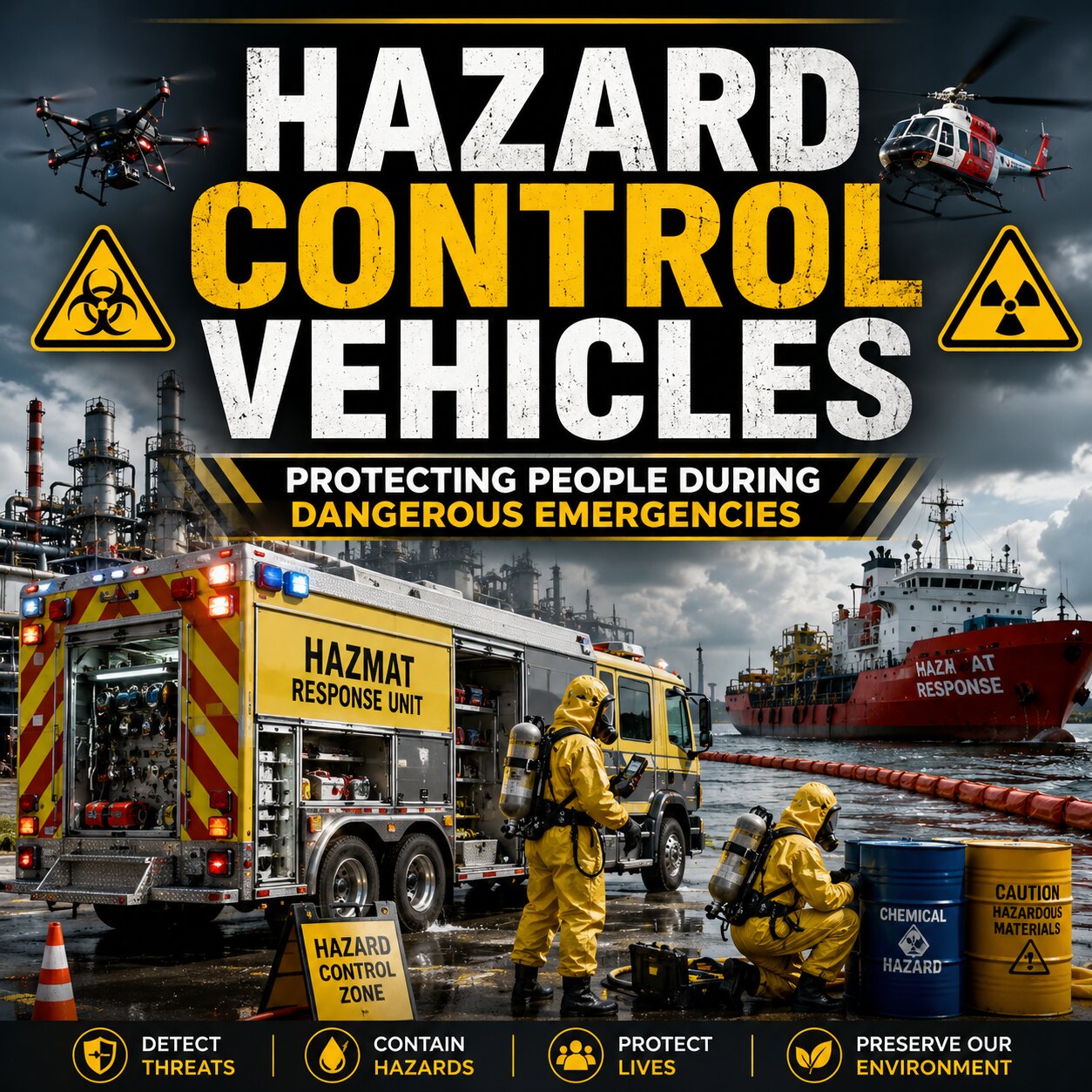
Hazard control vehicles play a critical role in managing dangerous situations that threaten public safety, infrastructure, and the environment. These specialised emergency vehicles are designed to respond to hazardous materials, chemical spills, biological threats, radiation incidents, gas leaks, industrial accidents, and other high-risk emergencies. Whether operating on land, sea, or in the air, hazard control vehicles help emergency teams contain threats before they escalate into major disasters.
As industries grow and transportation networks expand, the need for advanced hazard response capabilities continues to increase. Modern cities, ports, airports, factories, laboratories, and energy facilities all require specialised emergency response systems capable of handling dangerous materials safely and efficiently.
The emergency services sector has developed a wide range of hazard control vehicles equipped with advanced protective technology, detection systems, decontamination tools, and containment equipment. These vehicles allow trained personnel to operate in environments that would otherwise be too dangerous for ordinary emergency responders.
Hazard control vehicles represent the final layer of protection in many emergency situations, helping safeguard both human lives and critical infrastructure during potentially catastrophic events.
Land-Based Hazard Control Vehicles
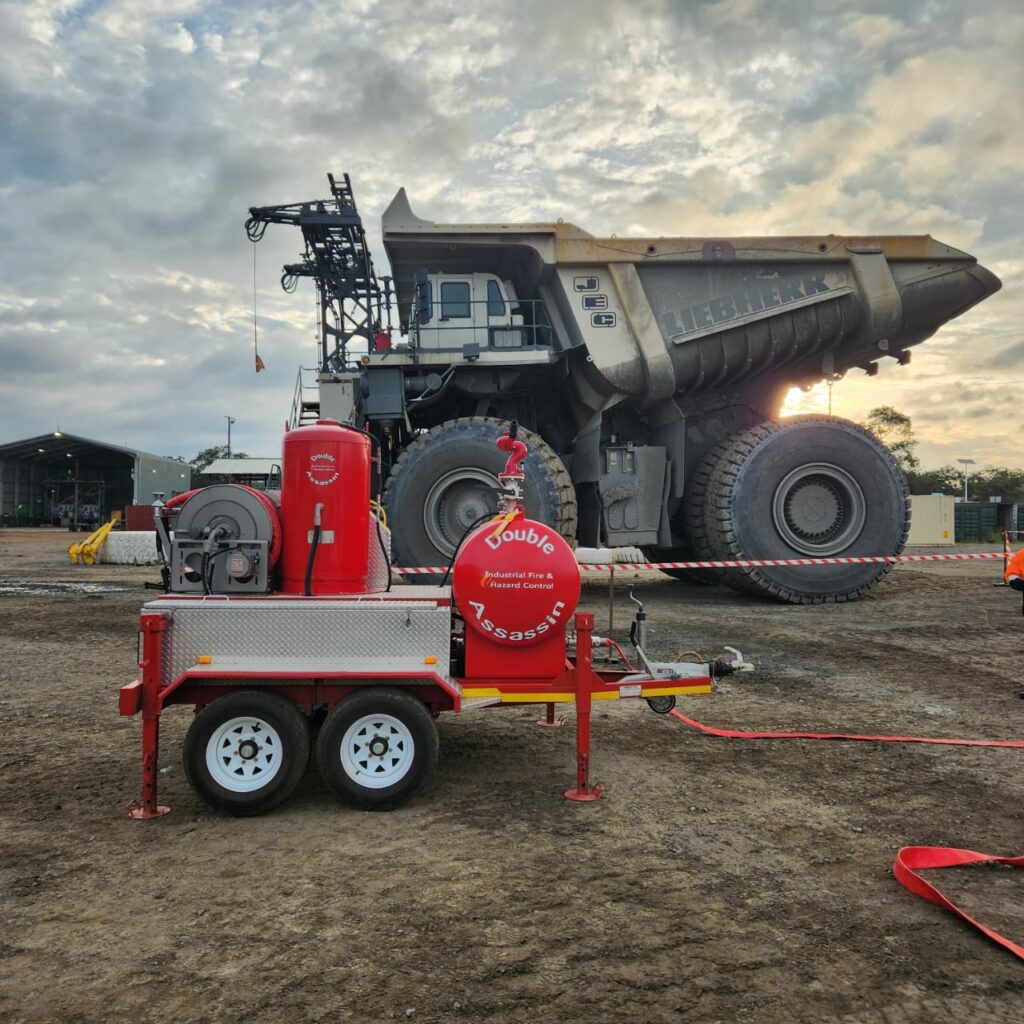
Most hazard control operations begin on land, especially in urban, industrial, and transport environments. Land-based hazard control vehicles are often deployed by fire departments, disaster management teams, military units, environmental agencies, and specialised hazardous materials response teams.
HazMat trucks are among the most recognisable hazard control vehicles. These large emergency units transport containment equipment, chemical detection tools, breathing apparatus systems, protective suits, and mobile laboratories. Many modern HazMat vehicles also include communication centres that coordinate large-scale emergency operations.
Decontamination vehicles are another important category. These units are designed to clean hazardous substances from people, equipment, and affected environments. They often feature portable showers, chemical neutralisation systems, and specialised waste containment equipment.
Some hazard control vehicles are built specifically for industrial environments. Airports, oil refineries, mining operations, chemical plants, and nuclear facilities often maintain their own dedicated emergency response fleets. These vehicles are engineered to respond rapidly within highly specialised and dangerous locations.
Hazard Control Vehicles on Water
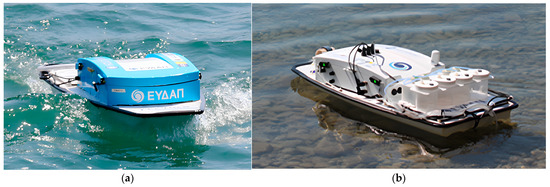
Maritime hazard control operations are equally important, particularly in busy ports, shipping routes, and offshore energy sectors. Hazard control vessels are used to respond to oil spills, chemical leaks, fuel contamination, and dangerous cargo incidents at sea.
Oil spill response ships are equipped with containment booms, skimmers, recovery systems, and onboard storage tanks. These vessels help prevent environmental disasters by limiting the spread of hazardous substances across oceans, rivers, and harbours.
Fireboats may also operate as hazard control vehicles in certain emergencies. Many are fitted with chemical suppression systems and specialised foam equipment capable of dealing with flammable industrial substances near docks and ships.
Some modern maritime response vessels include advanced environmental monitoring systems. These technologies allow crews to track contamination levels, monitor toxic gases, and coordinate cleanup operations more effectively during large-scale incidents.
Airborne Hazard Control Support
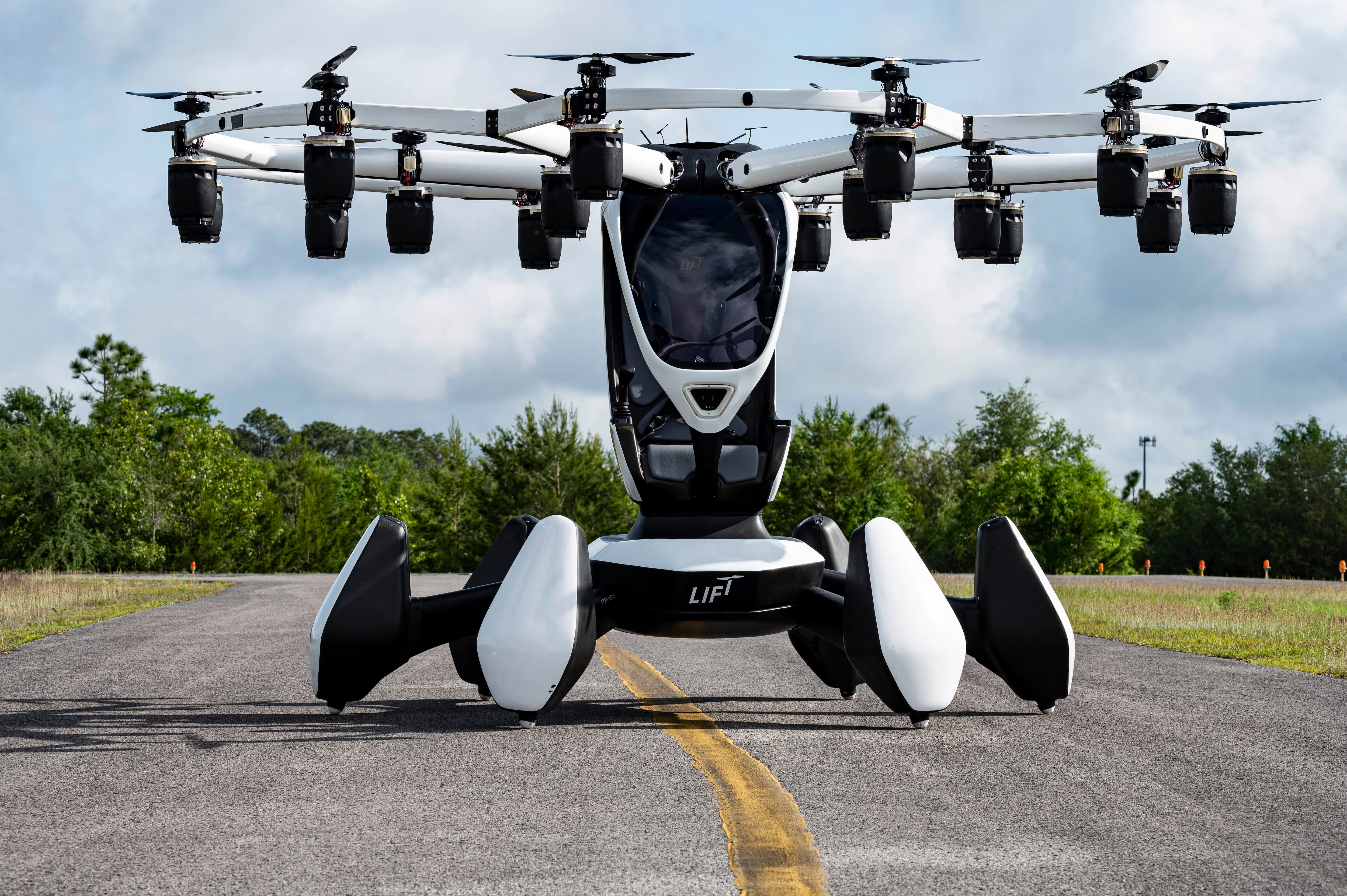
Aircraft and drones increasingly support hazard control operations by providing aerial surveillance, thermal imaging, chemical detection, and rapid situational awareness. These airborne systems help emergency teams assess dangerous environments without immediately placing personnel at risk.
Helicopters are often used during chemical plant fires, industrial explosions, and environmental disasters. From the air, emergency coordinators can evaluate containment zones, evacuation routes, and the spread of hazardous materials more accurately.
Drones have become especially valuable in modern hazard control operations. Small unmanned aerial systems can enter contaminated or unstable environments safely while transmitting live video and sensor data back to response teams. This reduces risks for emergency personnel operating in unpredictable conditions.
Some specialised aircraft also assist with wildfire suppression, chemical dispersion monitoring, and atmospheric hazard analysis. These aerial platforms play a growing role as hazard control technology continues to evolve.
Key Features of Modern Hazard Control Vehicles
Modern hazard control vehicles are equipped with highly specialised technology designed to protect responders and contain dangerous situations quickly. Some of the most important features include:
- Chemical and radiation detection systems
- Advanced breathing apparatus equipment
- Pressurised protective cabins
- Decontamination systems
- Hazard containment tools
- Thermal imaging cameras
- Environmental monitoring sensors
- Mobile communication centres
- Remote-operated robotic systems
- Specialised firefighting foam systems
These technologies allow hazard response teams to work more safely and effectively during life-threatening emergencies.
A Vital Part of Emergency Response
Hazard control vehicles may not receive the same public attention as ambulances or fire engines, but they are among the most important assets within modern emergency response systems. Their ability to contain dangerous substances, protect emergency personnel, and minimise environmental damage makes them essential in today’s industrial and technological world.
As global infrastructure continues to expand, hazard control vehicles will likely become even more advanced. Artificial intelligence, robotics, drone integration, and smart environmental monitoring systems are already shaping the future of emergency response operations.
From chemical spills on highways to hazardous cargo incidents at sea, these specialised vehicles stand ready to protect lives when ordinary emergency systems are no longer enough.