
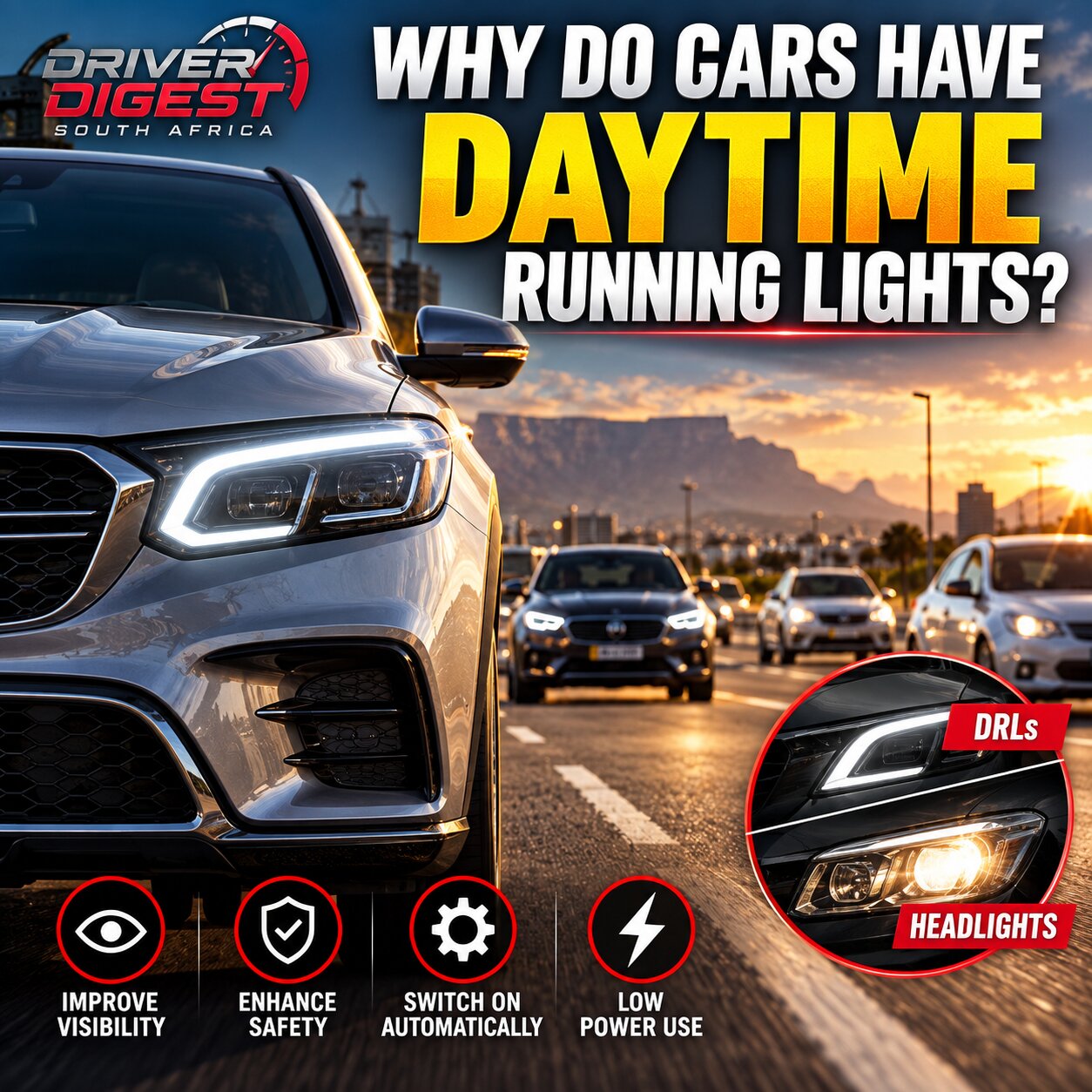
Why Do Cars Have Daytime Running Lights?
Daytime running lights (DRLs) have become a familiar feature on modern vehicles, but they aren’t simply there to make a car look more stylish. Their primary purpose is to make vehicles easier for other road users to see during daylight hours.
Unlike normal headlights, DRLs usually activate automatically when the vehicle is running. They are designed primarily for visibility rather than illuminating the road ahead. This is why they are generally less powerful than headlights and shouldn’t be considered a substitute when driving at night or in poor visibility.
How Daytime Running Lights Improve Visibility
A moving vehicle can sometimes blend into its surroundings, particularly against bright skies, shadows, buildings or other traffic. DRLs create a distinctive point of light that can help another driver notice an approaching vehicle sooner.
Some important points about DRLs include:
- They normally switch on automatically with the vehicle.
- They consume relatively little power, particularly modern LED systems.
- They make vehicles more noticeable during daylight.
- They are different from dipped-beam headlights.
- Rear lights may not illuminate when DRLs are active.
That final point is particularly important. Seeing lights on your dashboard or ahead of your vehicle doesn’t necessarily mean your full lighting system is operating.
DRLs Don’t Replace Your Headlights
Daytime running lights are a useful safety feature, but drivers still need to use their headlights when conditions require them.
At night, during heavy rain, in fog or whenever visibility deteriorates significantly, proper headlights provide the illumination and visibility DRLs cannot.
So, while those distinctive strips of LEDs certainly contribute to modern vehicle design, daytime running lights ultimately have a practical job: helping other road users see your vehicle sooner.