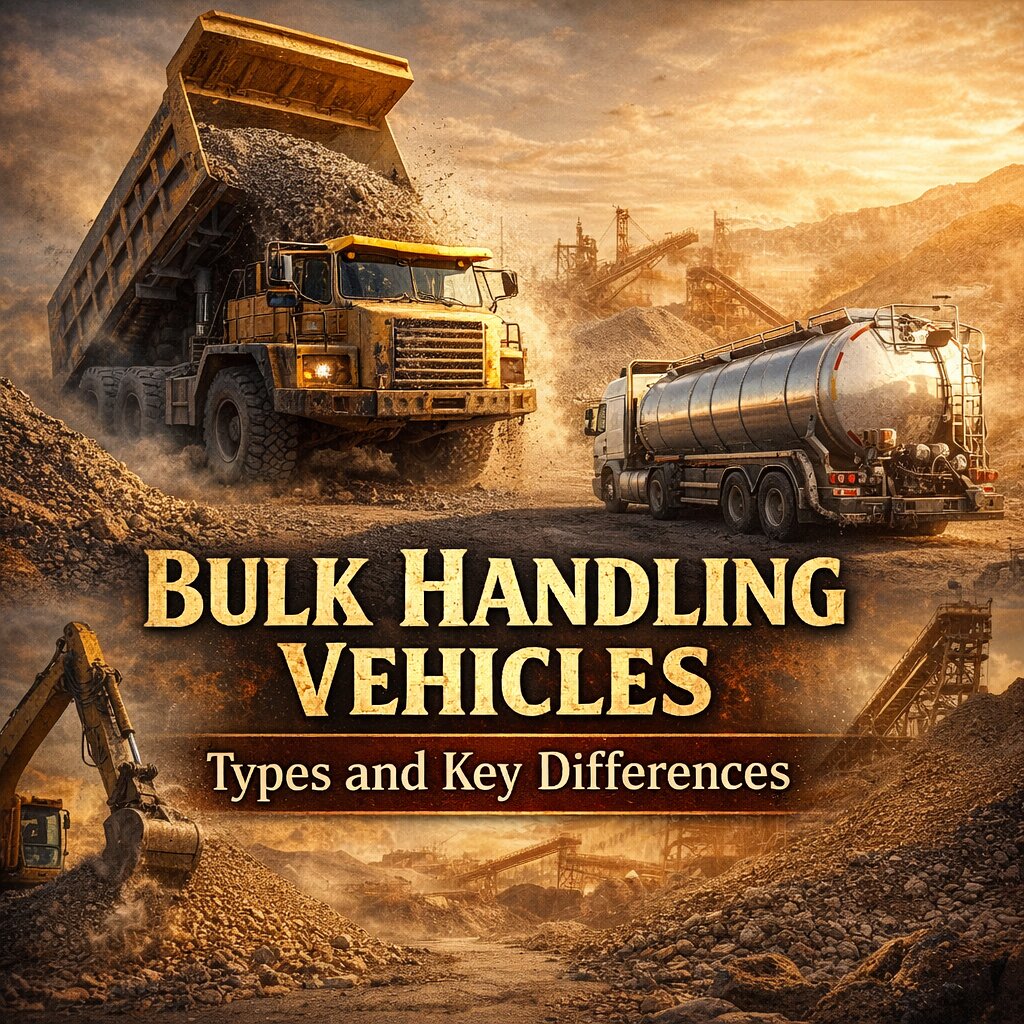
Bulk Handling Vehicles: How They Differ from Other Cargo Transport Systems
Bulk handling vehicles play a critical role in industries that move large volumes of loose materials rather than packaged goods. While many people think of cargo vehicles as trucks carrying boxes or pallets, this category operates very differently, focusing on efficiency, volume and specialised transport systems.
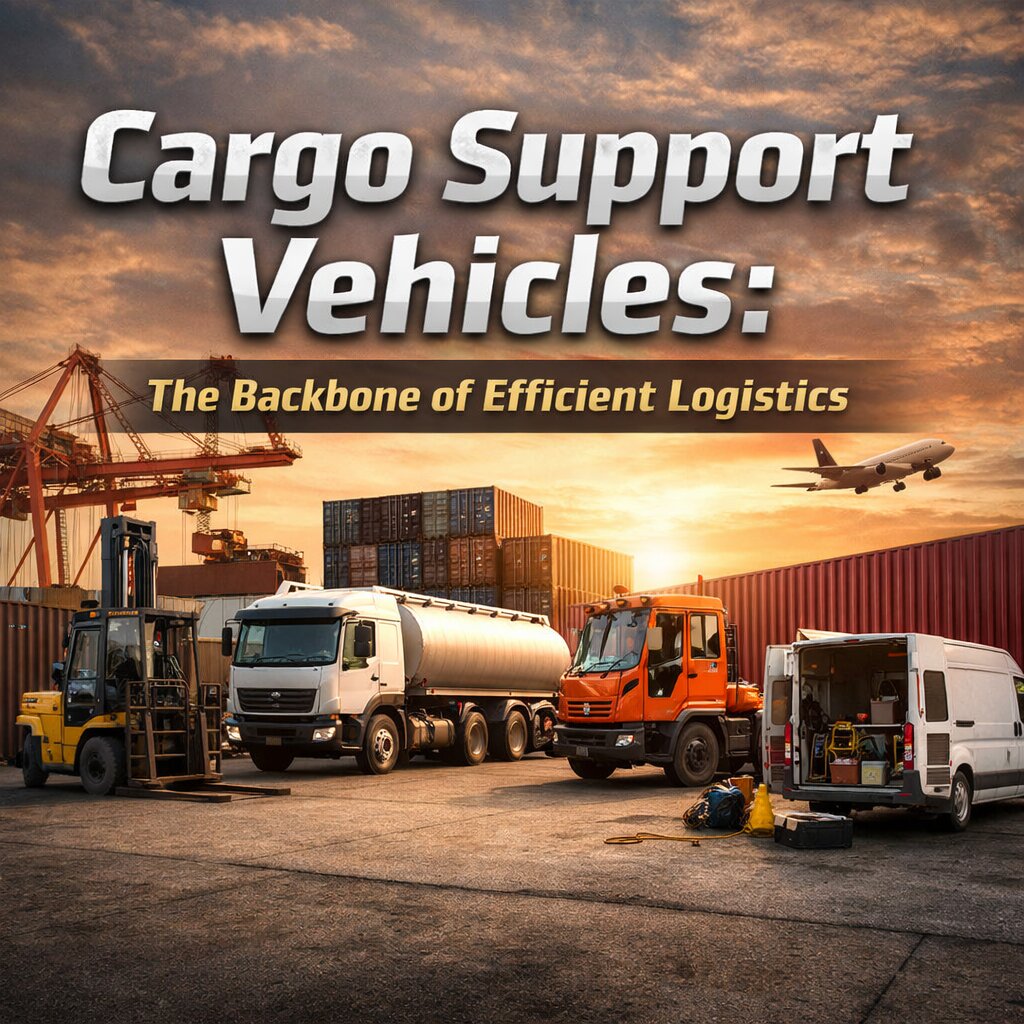
If you have been following the Cargo Vehicles Series, you will have seen how freight, logistics and delivery vehicles each serve structured transport systems. Bulk handling vehicles, however, exist in a world where cargo is not neatly contained. Instead, it flows, pours and shifts, requiring entirely different engineering and operational approaches.
Understanding how bulk handling vehicles differ from other transport types will give you a clearer picture of how industries like mining, agriculture and construction move materials at scale.
What are bulk handling vehicles and what do they transport
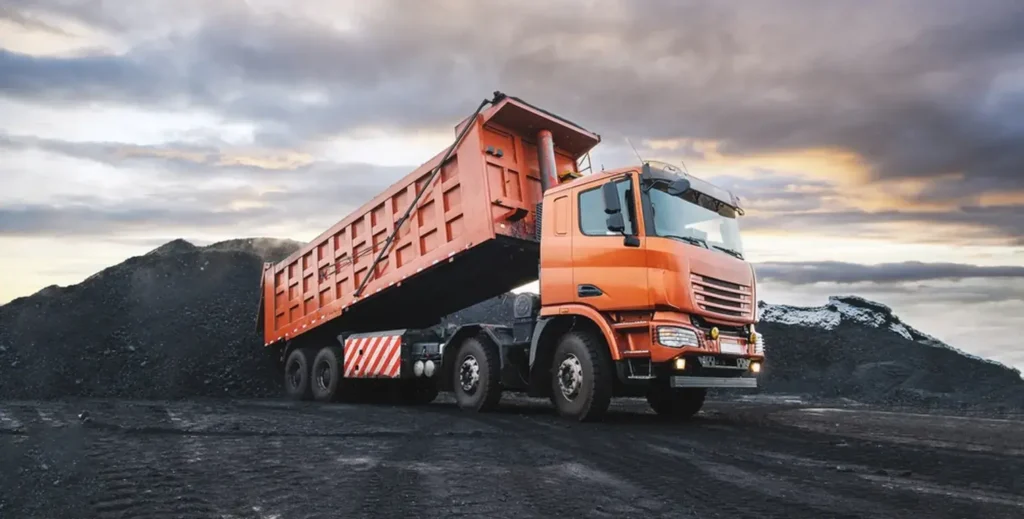
Bulk handling vehicles are designed to transport loose, unpackaged materials in large quantities. These materials are typically poured, scooped or transferred using mechanical systems rather than manually loaded or palletised.
In this category, the focus is not on protecting individual items but on moving mass efficiently. Materials such as sand, grain, coal, cement and gravel are common loads, each requiring vehicles built to handle weight distribution, flow and discharge.
Unlike standard cargo transport, where goods are counted and tracked individually, bulk handling vehicles deal with volume and weight. This changes how loading and unloading works, often involving tipping systems, conveyors or pressurised tanks.
Because of this, these vehicles are usually found in controlled environments such as mines, farms, ports and construction sites, rather than urban delivery routes.
How bulk handling vehicles differ from freight and logistics transport
One of the key differences between bulk handling vehicles and other cargo systems lies in how the cargo is managed. Freight vehicles typically carry packaged goods such as containers, crates or pallets. These are organised, tracked and often handled multiple times throughout the supply chain.
Bulk handling vehicles remove that layer entirely. There is no packaging, no individual item tracking and often no intermediate handling. The material is loaded in large quantities and transported directly to its destination, where it is discharged in one continuous process.
Logistics vehicles, on the other hand, focus on coordination and distribution. They are part of a broader network that ensures goods move efficiently between locations. Bulk handling vehicles are less about coordination and more about raw movement, shifting large volumes from one point to another as efficiently as possible.
This difference means that bulk handling vehicles are often more specialised, built for specific materials and environments rather than general-purpose transport.
The difference between bulk handling and delivery vehicles
Delivery vehicles operate at the opposite end of the spectrum. Their purpose is precision, ensuring that specific items reach specific destinations, often within tight timeframes and urban environments.
Bulk handling vehicles do not operate with that level of precision. Instead, they focus on scale. A single load can represent tonnes of material, delivered in one operation rather than multiple stops.
Where delivery vehicles are designed for accessibility, manoeuvrability and frequent stops, bulk handling vehicles are built for strength, capacity and efficiency over short or controlled routes.
This distinction highlights how different sectors require entirely different vehicle designs, even though they all fall under the broader category of cargo transport.
Common types of bulk handling vehicles
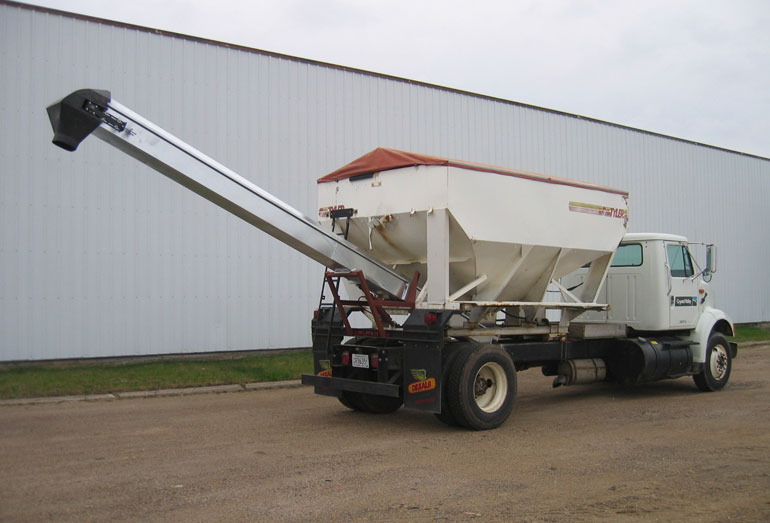
There are several types of bulk handling vehicles, each designed for specific materials and industries. While they share the same core purpose, their design can vary significantly depending on how the material needs to be transported and unloaded.
- Dump trucks used in construction and mining to transport sand, gravel and rock
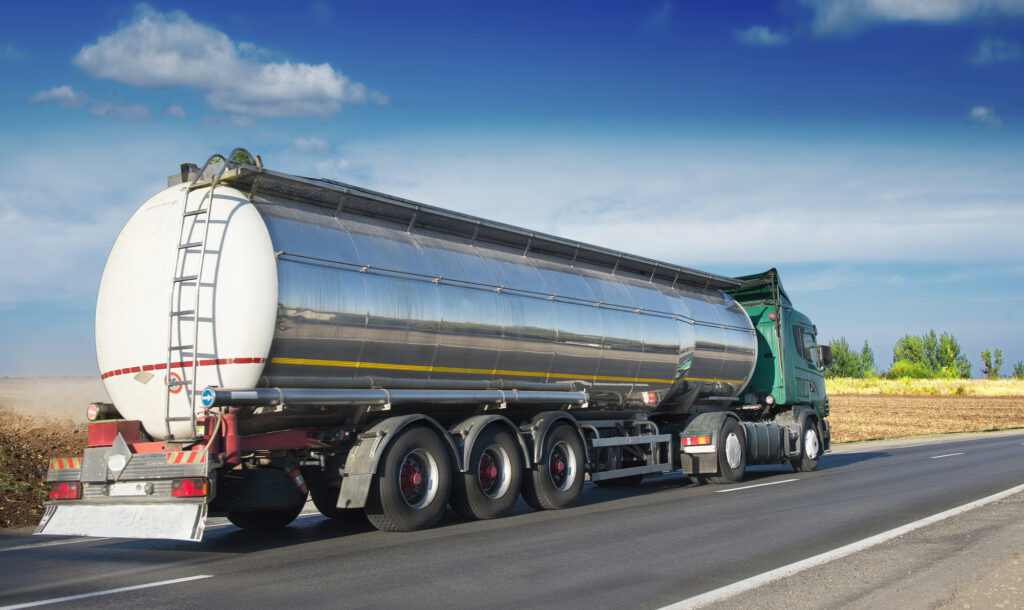
- Tanker trucks designed for powders or liquids like cement or fuel
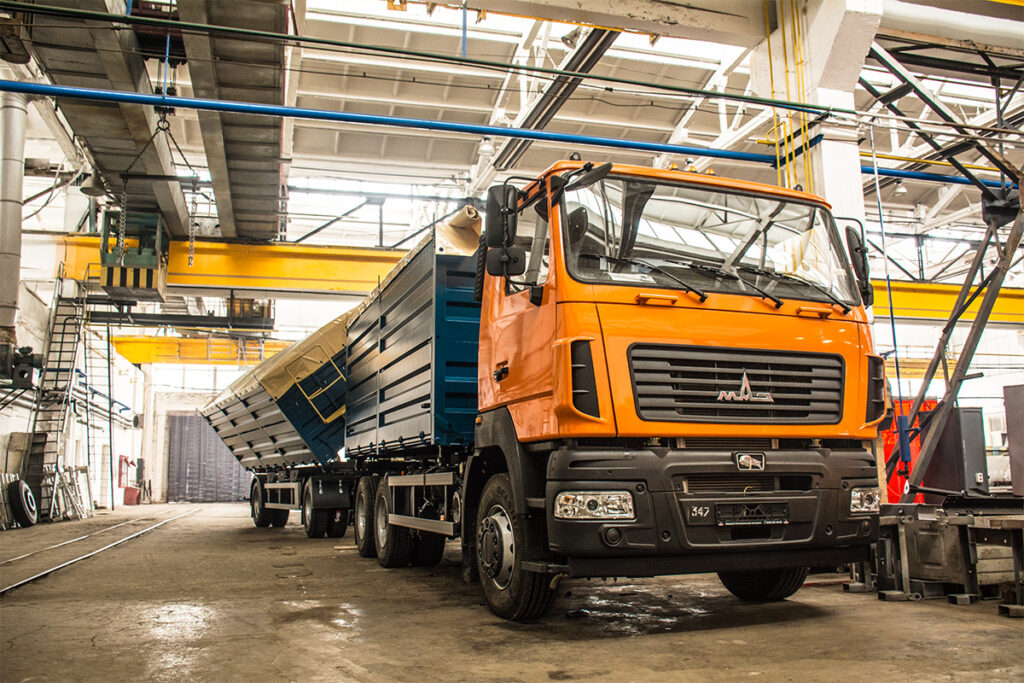
- Grain trucks used in agriculture for transporting harvested crops
- Conveyor-based vehicles used in industrial and port environments
- Hopper trucks that allow controlled discharge of materials
Each of these examples shows how bulk handling vehicles are engineered around the material they carry, rather than adapting the material to the vehicle.
Why bulk handling vehicles are essential in heavy industries
Industries that rely on raw materials depend heavily on bulk handling vehicles to maintain efficiency and productivity. Without them, the process of moving large volumes would become slower, more labour-intensive and far less cost-effective.
In mining, these vehicles transport extracted materials from the source to processing facilities. In agriculture, they move harvested crops quickly to storage or distribution points. In construction, they ensure that essential materials like sand and gravel are delivered in the quantities required to keep projects moving.
Because these industries operate on scale, bulk handling vehicles are designed to maximise output while minimising time and effort. Their role is not just transportation but enabling entire systems to function smoothly.
Final thoughts
Bulk handling vehicles stand apart from other cargo transport systems because they are built for volume rather than variety. They do not deal with individual items but with entire loads of raw material, moved efficiently and often in a single operation.
As you continue exploring the Cargo Vehicles Series, you will see how each category serves a unique purpose. Bulk handling vehicles represent one of the most specialised areas, where engineering, environment and material all come together to shape how transport works.
Understanding these differences not only improves your knowledge of transport systems but also highlights the complexity behind moving the materials that power modern industries.