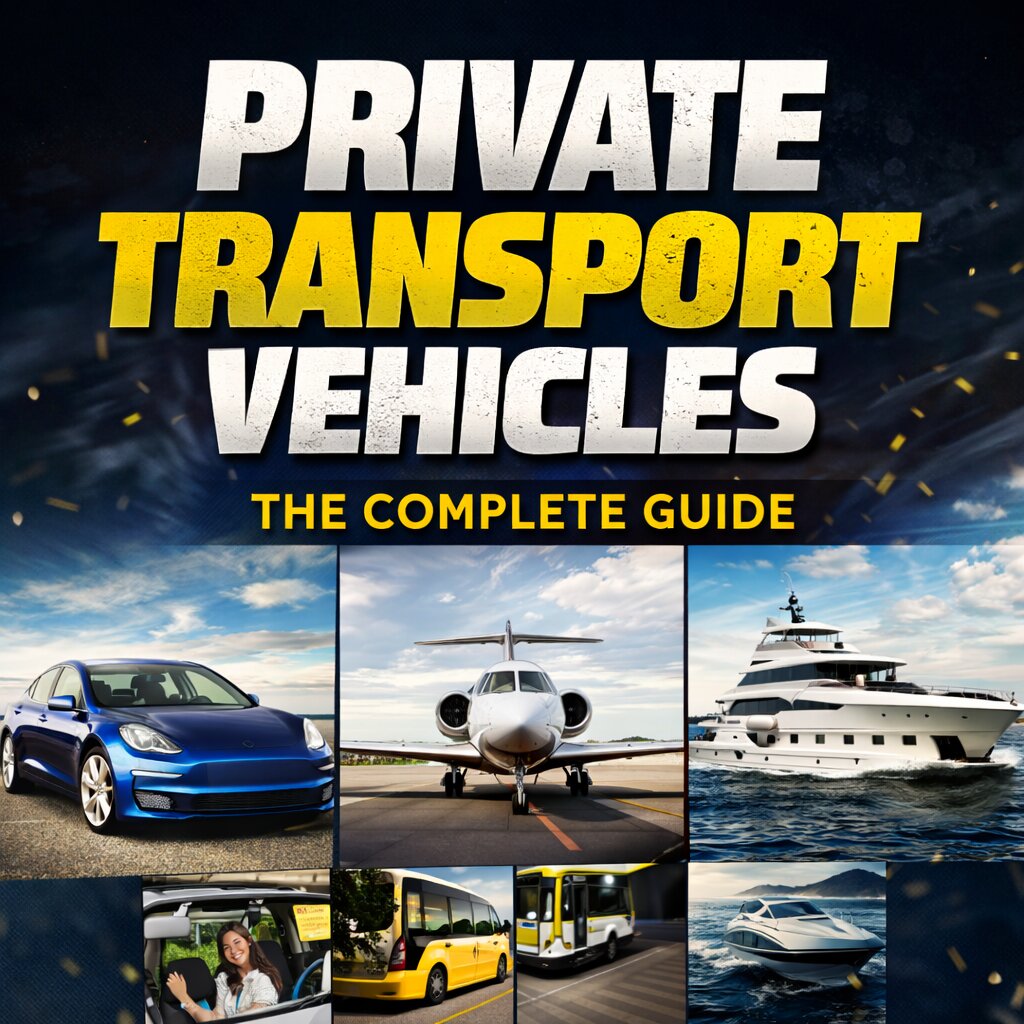
Private Transport Vehicles: A Complete Guide to Personal Mobility Across Land, Air, and Sea
Private transport vehicles play a crucial role in modern mobility, offering individuals and businesses flexibility, privacy, and control over how they travel. Unlike public transport systems, these vehicles are owned, leased, or privately operated, allowing users to move on their own schedule without relying on fixed routes or timetables.
From everyday cars and ride-hailing services to private jets and luxury yachts, private transport vehicles span a wide range of industries and use cases. In this guide, we explore what they are, the different types available, and how they compare across various transport sectors.
What are private transport vehicles?

Private transport vehicles refer to any mode of transportation used exclusively by an individual, family, or organisation rather than shared with the general public. These vehicles are typically operated for personal use, corporate travel, or specialised services such as executive transport or logistics support.
One of the defining features of private transport vehicles is control. Users can determine their departure times, routes, and level of comfort, making them ideal for those who prioritise convenience and efficiency. This is especially important in regions where public transport infrastructure may be limited or inconsistent.
Another key aspect is customisation. Many private transport vehicles can be tailored to suit specific needs, whether that means luxury interiors, enhanced safety features, or specialised equipment for business operations.
Types of private transport vehicles across sectors

Private vehicles exist across multiple transport sectors, each offering unique advantages depending on the journey and purpose. These vehicles can be broadly categorised into land, air, and water transport.
On land, the most common private transport vehicles include passenger cars, SUVs, motorcycles, and private shuttles. Ride-hailing services also fall into this category, as they provide on-demand transport that is not shared with the wider public in the same way as buses or trains.
In the air, private transport vehicles include private jets, chartered aircraft, and helicopters. These options are widely used by business executives, high-net-worth individuals, and emergency services that require rapid, direct travel.
On water, private transport vehicles range from small personal boats and jet skis to large luxury yachts. These are often used for leisure, tourism, or specialised coastal transport.
Common examples and use cases
Private vehicles serve a wide range of purposes, from daily commuting to luxury travel and specialised operations. Their versatility makes them essential across both personal and commercial contexts.
- Personal commuting: Cars, motorcycles, and small electric vehicles used for daily travel
- Ride-hailing and private hire: Services like taxis and app-based transport solutions
- Corporate transport: Executive cars, chauffeur services, and company fleets
- Air travel: Private jets and helicopters for business or emergency use
- Marine travel: Boats and yachts for leisure, tourism, or private transport
- Specialised services: Medical transport, security vehicles, and VIP logistics
These examples highlight how private transport vehicles adapt to different needs, offering tailored solutions that public systems cannot always provide.
Advantages and limitations

The popularity of private vehicles continues to grow due to their many benefits. One of the main advantages is flexibility, allowing users to travel whenever and wherever they choose without restrictions.
Comfort and privacy are also major factors. Private transport vehicles often provide a more personalised and secure environment, making them ideal for long journeys, business travel, or sensitive situations.
However, there are also limitations to consider. Private transport vehicles can be more expensive than public alternatives, especially when factoring in fuel, maintenance, insurance, and operational costs. Additionally, increased use of private vehicles can contribute to traffic congestion and environmental concerns.
How private transport compares to public mobility
When comparing private transport vehicles to public transport systems, the key differences lie in accessibility, cost, and convenience. Public transport is generally more affordable and environmentally efficient, particularly in densely populated urban areas.
In contrast, private transport vehicles offer unmatched convenience and time efficiency. There are no waiting times, crowded spaces, or fixed routes, making them the preferred choice for many users who value independence.
The decision between the two often depends on individual priorities. For some, affordability and sustainability take precedence, while others prioritise flexibility and comfort offered by private transport vehicles.
The evolving future of private mobility
As technology continues to advance, private transport vehicles are evolving rapidly. Electric vehicles, autonomous driving systems, and smart connectivity are transforming how people interact with their vehicles across all sectors.
In aviation, more efficient private jets and emerging electric aircraft concepts are reshaping private air travel. Similarly, in the marine sector, eco-friendly yachts and hybrid propulsion systems are becoming more common.
The future of private transport vehicles will likely focus on sustainability, efficiency, and integration with smart city infrastructure, ensuring that personal mobility continues to adapt to changing global demands.
Driving personal freedom in modern transport
Private transport vehicles remain a cornerstone of modern mobility, offering flexibility, comfort, and tailored solutions across land, air, and sea. Whether for daily commuting, luxury travel, or specialised services, their role continues to expand as technology and user expectations evolve.
As industries innovate and sustainability becomes a priority, private transport vehicles will play an even greater role in shaping the future of global transportation.