How Motorcycle Aerodynamics Improve Racing Performance
Modern racing motorcycles rely on considerably more than powerful engines to achieve competitive lap times. The way air travels around a motorcycle influences acceleration, handling, braking and stability at high speeds. Motorcycle aerodynamics have consequently become an important area of development in professional motorcycle racing.
Manufacturers invest significant resources into designing fairings, winglets and airflow channels that improve performance under different racing conditions. Engineers must also consider how the rider’s movements influence the aerodynamic characteristics of the motorcycle. Finding the correct balance between aerodynamic resistance and stability can determine whether a rider gains or loses valuable time.
How Motorcycle Aerodynamics Work
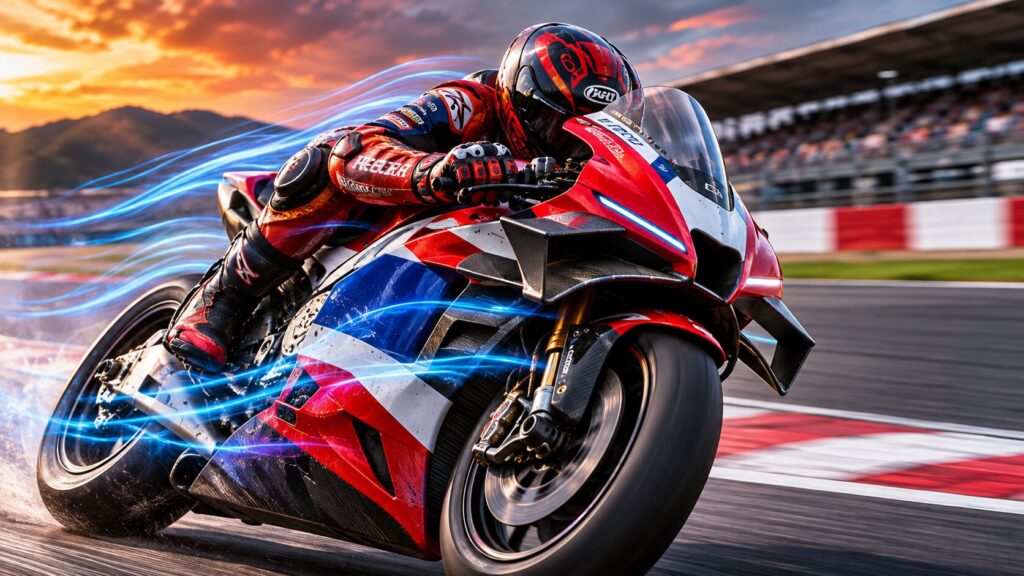
Aerodynamics describes how moving air interacts with an object travelling through it. As a racing motorcycle accelerates, aerodynamic forces become increasingly significant, influencing how much power is required to maintain or increase speed. Engineers study these forces to identify opportunities for improving overall racing performance.
Motorcycle aerodynamics are particularly complicated because motorcycles lean during cornering and riders frequently change their body positions. Unlike enclosed racing cars, motorcycles expose substantial mechanical and human surfaces to moving air. Designers must therefore consider the combined aerodynamic behaviour of the motorcycle and its rider.
Reducing Drag for Higher Straight-Line Speeds
Aerodynamic drag is the resistance created when a motorcycle travels through the air. As speed increases, overcoming this resistance requires considerably more engine power. Reducing unnecessary drag allows a motorcycle to achieve higher speeds without necessarily increasing its engine output.
Effective motorcycle aerodynamics help air travel smoothly around the front fairing, fuel tank and rear bodywork. Manufacturers carefully shape these components to reduce airflow separation and unnecessary turbulence. Smaller improvements across several surfaces can collectively contribute to better straight-line performance.
Riders also influence drag by adopting a compact riding position behind the windscreen. Tucking their heads and shoulders towards the fuel tank reduces the frontal area exposed to approaching air. This technique is particularly valuable during long straights where aerodynamic resistance becomes substantial.
Generating Downforce With Motorcycle Aerodynamics
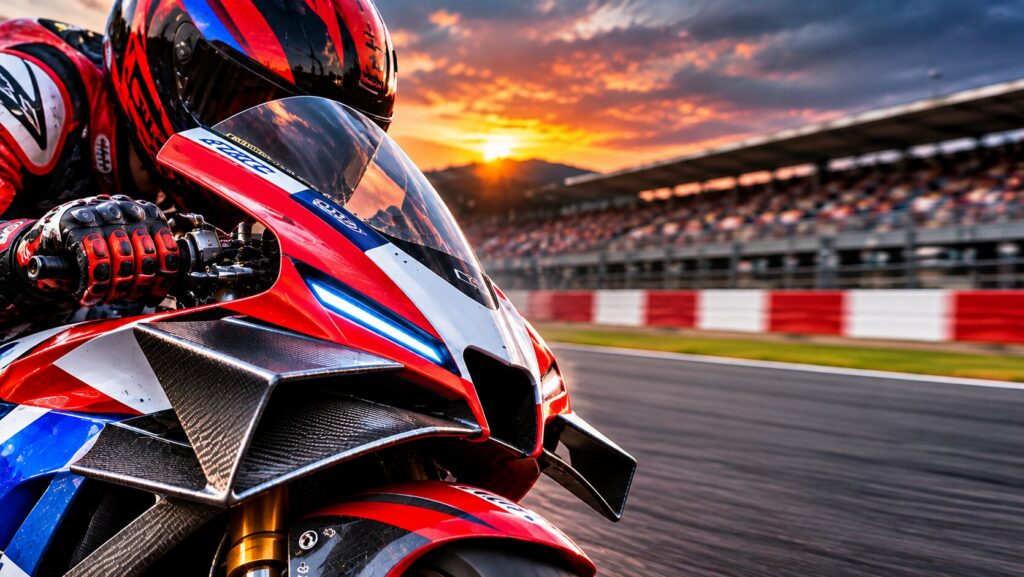
Modern racing motorcycles frequently feature aerodynamic winglets integrated into their front bodywork. These components generate aerodynamic forces that help increase the load on the front wheel when the motorcycle travels at sufficient speed. Their effectiveness depends on their shape, positioning and interaction with surrounding airflow.
The official MotoGP guide to winglets explains their contribution to acceleration, braking and high-speed stability. These aerodynamic devices can reduce the tendency of the front wheel to lift during hard acceleration. However, producing additional downforce can also increase drag, requiring engineers to balance competing performance objectives.
Improving High-Speed Stability
Racing motorcycles can experience instability when aerodynamic forces interact with their suspension, steering and tyres. Crosswinds, turbulent airflow and sudden changes in rider position can influence how the motorcycle behaves. Predictable aerodynamic characteristics help riders maintain greater confidence at high speeds.
Well-developed motorcycle aerodynamics can complement mechanical components such as motorcycle steering dampers. While steering dampers help control rapid steering movements, aerodynamic design can influence the forces acting on the motorcycle in the first place. Both technologies contribute to stability through different mechanisms.
Enhancing Cornering Performance
Motorcycles present unique aerodynamic challenges because they lean considerably when negotiating fast corners. This movement changes the orientation of aerodynamic surfaces relative to approaching air and the track. A component that performs effectively on a straight might behave differently when the motorcycle is leaning.
Engineers develop motorcycle aerodynamics to produce predictable forces across a range of lean angles. Fairing shapes can influence airflow near the track surface, potentially generating beneficial aerodynamic effects during cornering. These characteristics must be carefully coordinated with tyre grip, suspension behaviour and rider feedback.
Unlike mechanical grip, aerodynamic benefits depend strongly on speed and airflow conditions. Slow corners generally offer fewer aerodynamic advantages than fast sweeping sections. Racing teams must therefore establish setups that perform consistently throughout an entire circuit.
Managing Airflow for Component Cooling
Aerodynamic engineering also influences how effectively racing motorcycles manage operating temperatures. Engines, radiators and braking components require sufficient cooling during demanding racing conditions. Carefully positioned openings and ducts help direct airflow towards components that need it.
As explored in our guide to motorcycle brake cooling, temperature management contributes to consistent braking performance. Motorcycle aerodynamics must account for cooling requirements without introducing excessive resistance. Enlarging an air intake might improve cooling, for example, while also creating additional drag.
Testing and Refining Aerodynamic Designs
Manufacturers use several engineering methods to evaluate motorcycle aerodynamics before introducing new components to the racetrack. Computer simulations allow engineers to examine airflow patterns and compare alternative designs. Wind tunnel experiments and circuit testing then help validate their predictions.
Common aerodynamic development methods include:
- Computational fluid dynamics simulations.
- Wind tunnel testing with motorcycles and riders.
- Air pressure and aerodynamic force measurements.
- Track telemetry and performance comparisons.
- Rider feedback during controlled testing sessions.
Each method provides different information about motorcycle behaviour under racing conditions. Engineers combine these findings to identify designs that deliver measurable benefits without compromising other performance characteristics. Even promising developments must satisfy the technical regulations governing their respective championships.
The Future of Motorcycle Aerodynamics in Racing
Aerodynamic innovation will remain an important engineering consideration as motorcycle racing continues to evolve. Nevertheless, championship regulations can restrict aerodynamic development to manage costs, safety and competitive balance. Manufacturers must continually adapt their designs to these changing requirements.
The greatest achievements in motorcycle aerodynamics involve finding an effective compromise between speed, stability, cooling and rider control. Producing more downforce or reducing drag does not automatically guarantee faster lap times if other aspects of motorcycle performance suffer. Successful racing designs bring aerodynamic and mechanical technologies together as part of a coordinated engineering approach.
For enthusiasts following our bike racing coverage, aerodynamic developments provide another fascinating dimension to professional motorsport. Every sculpted fairing, integrated winglet and carefully positioned air intake represents an engineering decision that can influence the outcome of a race. Behind the extraordinary speeds achieved by modern racing motorcycles lies an equally extraordinary understanding of how air behaves.