
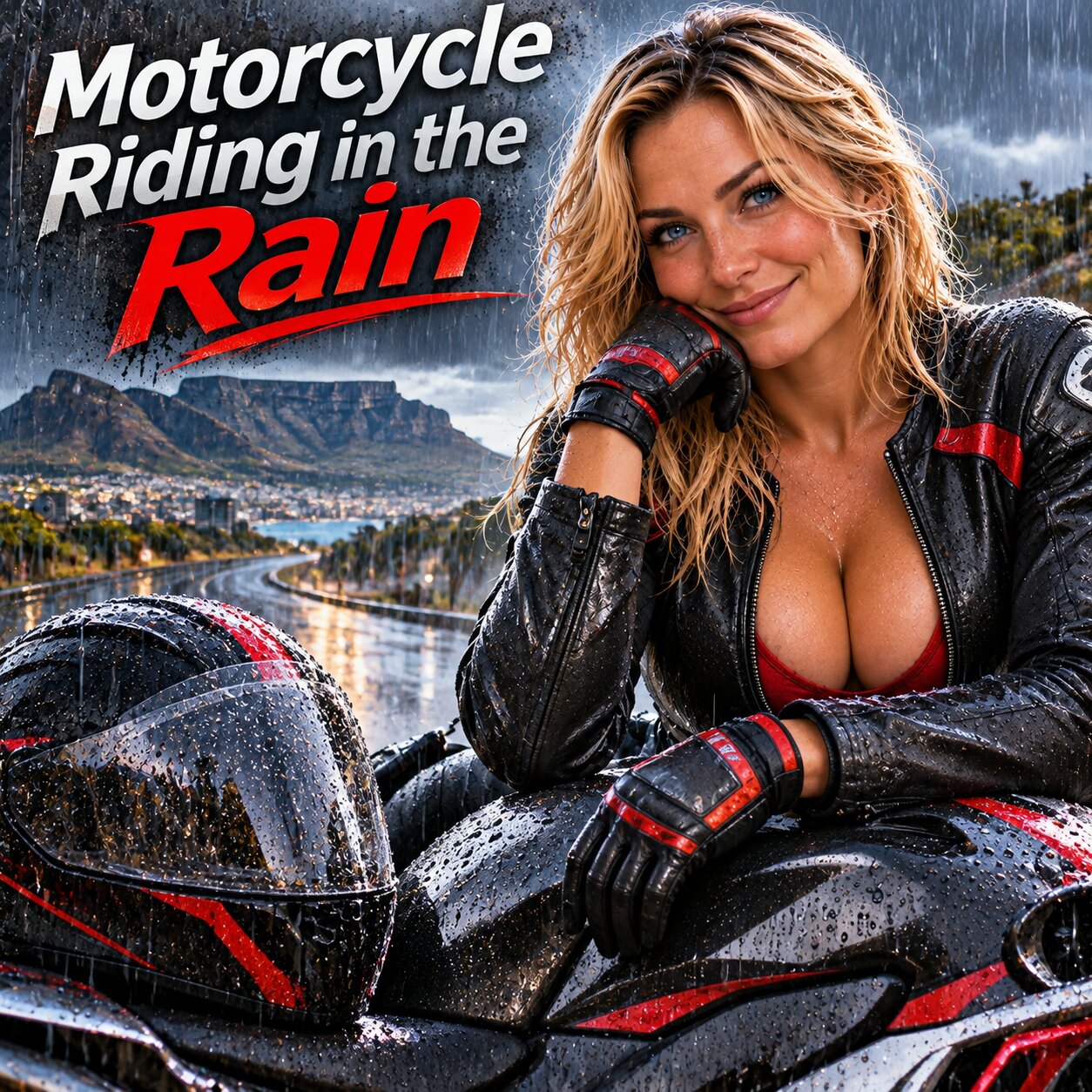
Motorcycle Riding in the Rain
Riding a motorcycle in wet weather requires additional concentration, smoother controls, and a greater awareness of changing road conditions. South African riders may encounter anything from light coastal drizzle to sudden summer thunderstorms, making rain preparation an important riding skill.
Understanding Wet Road Conditions
Rain reduces available tyre grip, particularly when water mixes with oil, dust, and other substances on the road. The first rainfall after a prolonged dry period can be especially hazardous because accumulated contaminants become slippery before being washed away.
Painted road markings, metal covers, railway tracks, and polished surfaces can also become dangerous when wet. Riders should avoid abrupt steering, braking, or acceleration when crossing these areas.
Adjusting Your Riding Technique
Smoothness becomes particularly important in wet conditions. Accelerating progressively, braking gently, and maintaining a relaxed riding posture help reduce the likelihood of losing traction.
Following distances should increase significantly because stopping distances can be longer and surrounding motorists may react unpredictably. Riders should also reduce their speed before entering corners rather than making sudden adjustments while leaning.
Modern motorcycles equipped with ABS and traction control provide valuable assistance, but these technologies cannot overcome the physical limits of tyre grip.
Choosing Suitable Riding Equipment
Waterproof motorcycle clothing helps riders remain comfortable and focused during prolonged exposure to rain. A properly fitted helmet with a clear visor, waterproof gloves, and boots designed for wet conditions can make a substantial difference.
Visibility is equally important. Reflective materials, functioning lights, and bright clothing help other motorists identify motorcycles in poor weather.
Tyres should have adequate tread depth, correct inflation pressures, and no visible damage. Riders should follow the motorcycle and tyre manufacturers’ recommendations rather than making arbitrary pressure adjustments for rain.
Recognising When to Stop Riding
Heavy rainfall can create standing water, reduce visibility, and conceal potholes or road debris. When conditions become severe, finding a safe location to wait is often preferable to continuing.
Riders should never attempt to cross flooded roads without knowing the depth, surface condition, and strength of the water flow.
Confidence Comes From Preparation
Wet-weather riding skills develop through experience, preparation, and an understanding of the motorcycle’s limitations. Practising smooth control inputs in safe conditions can help riders become more confident when unexpected rain arrives.
For more motorcycle advice, automotive insights, and South African motoring coverage, keep following Driver Digest SA.