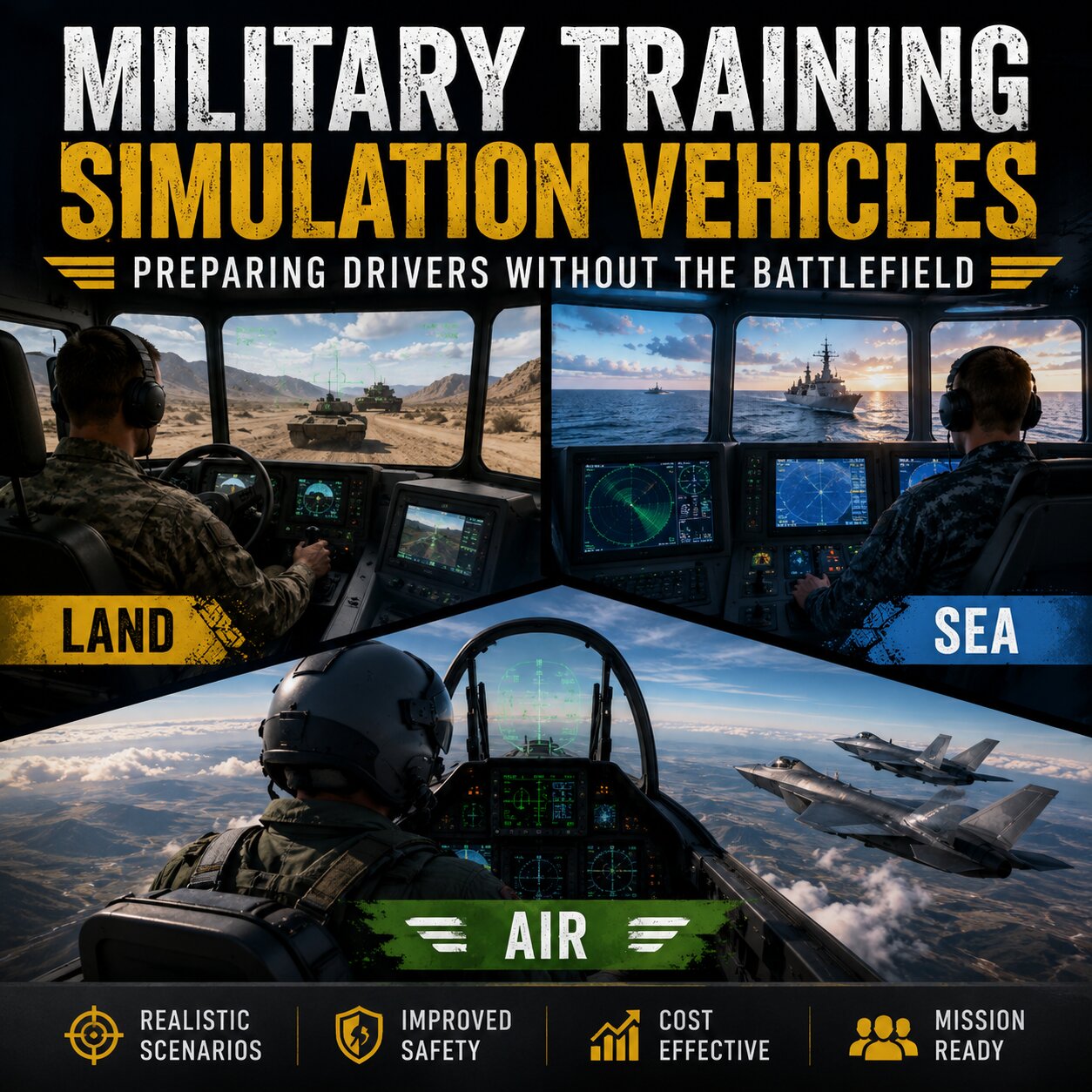
Military Training Simulation Vehicles: Preparing Drivers Without the Battlefield
Modern armed forces rely on military training simulation vehicles to prepare personnel for some of the most demanding driving conditions imaginable. Rather than placing recruits directly into dangerous situations, these advanced simulators provide a safe, controlled environment where military drivers can develop critical skills before operating real vehicles in the field.
As technology continues to evolve, military organisations around the world are investing heavily in simulation systems that accurately recreate combat scenarios, harsh terrain and vehicle handling. These platforms not only improve driver confidence but also reduce costs, minimise equipment wear and enhance overall operational readiness.
From tanks and armoured personnel carriers to logistics trucks and reconnaissance vehicles, simulation has become an essential part of modern military driver training.
Why Military Simulation Matters
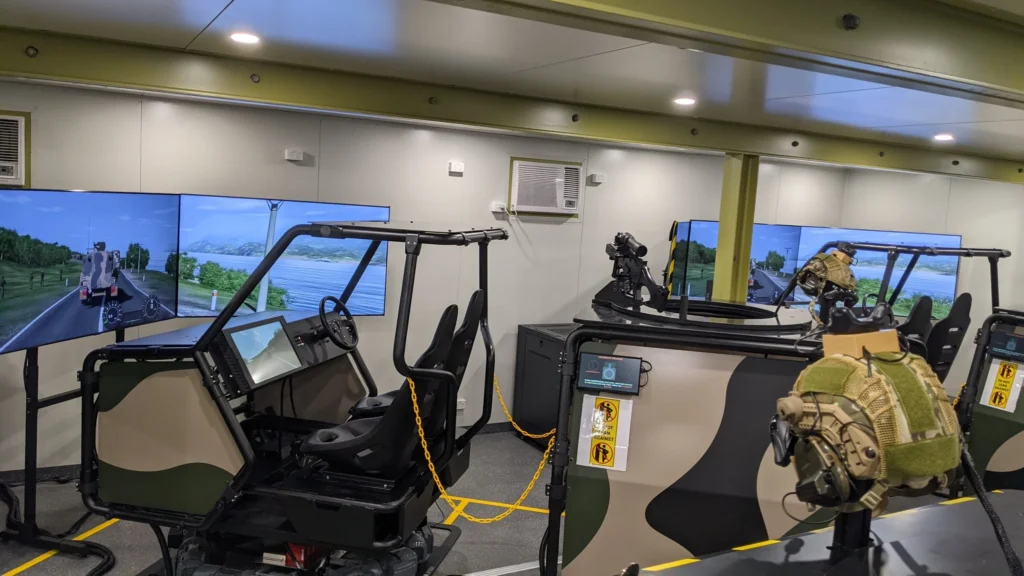
Driving military vehicles is significantly different from operating civilian cars or trucks. Drivers must contend with difficult terrain, limited visibility, heavy armour and constantly changing operational environments.
Simulation allows trainees to become familiar with vehicle controls and emergency procedures before ever entering a real machine. This reduces the likelihood of accidents during early training while allowing instructors to introduce increasingly challenging scenarios.
Many modern simulators also include realistic weather conditions, night operations and mechanical failures, helping trainees learn how to respond under pressure without putting lives or expensive equipment at risk.
Military instructors can also monitor every decision made by the trainee, providing detailed feedback that helps improve performance.
The Technology Behind Military Training Simulation Vehicles
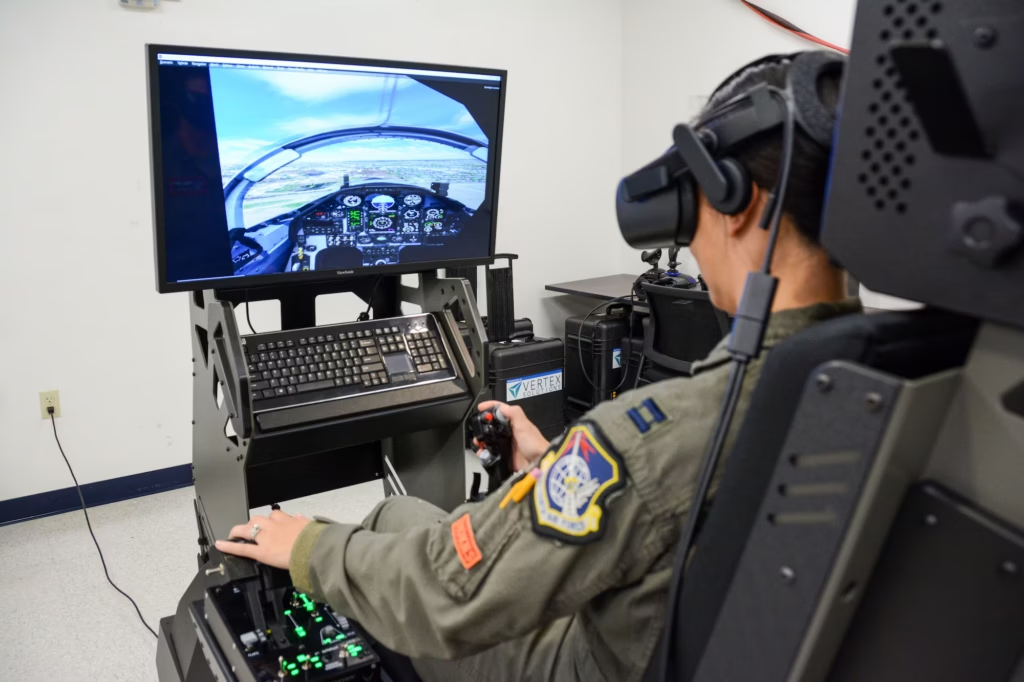
Today’s military training simulation vehicles are far more sophisticated than the simple driving simulators of previous decades. High-resolution displays, motion platforms and advanced physics engines combine to recreate the experience of operating heavy military machinery.
Many systems replicate the exact cockpit layout of real military vehicles, ensuring drivers develop muscle memory that transfers directly into real-world operations.
Common technologies include:
- Full-motion simulator platforms.
- Virtual reality and immersive displays.
- Dynamic terrain and weather simulation.
- AI-controlled civilian and military traffic.
- Multi-vehicle networked training exercises.
These technologies enable military units to conduct complex exercises that would otherwise require significant resources and logistical planning.
Examples of Military Training Simulation Vehicles
Military simulation covers virtually every type of vehicle used by modern armed forces. Whether operating on land, at sea or in the air, simulators allow personnel to gain valuable experience before transitioning to real equipment.
Land
Ground-based simulators are among the most common and replicate a wide range of military vehicles. These include:
- Main battle tanks
- Infantry fighting vehicles
- Armoured personnel carriers
- Tactical logistics trucks
- Engineering and recovery vehicles
These systems teach drivers how to navigate rough terrain, negotiate obstacles, manage vehicle systems and operate safely during combat or support missions.
Sea
Naval simulators prepare crews to handle vessels in a variety of weather and operational conditions. Examples include:
- Patrol boats
- Frigates and destroyers
- Amphibious landing craft
- Aircraft carriers
- Submarines
Training focuses on navigation, harbour manoeuvres, damage control, emergency procedures and coordinated fleet operations.
Air
Flight simulation has become one of the most advanced forms of military training. Aircraft commonly represented include:
- Fighter jets
- Attack helicopters
- Transport aircraft
- Maritime patrol aircraft
- Uncrewed aerial vehicles (UAVs)
Pilots and crews can practise take-offs, landings, combat manoeuvres, emergency situations and mission planning without risking aircraft or personnel.
Benefits Beyond Driver Training
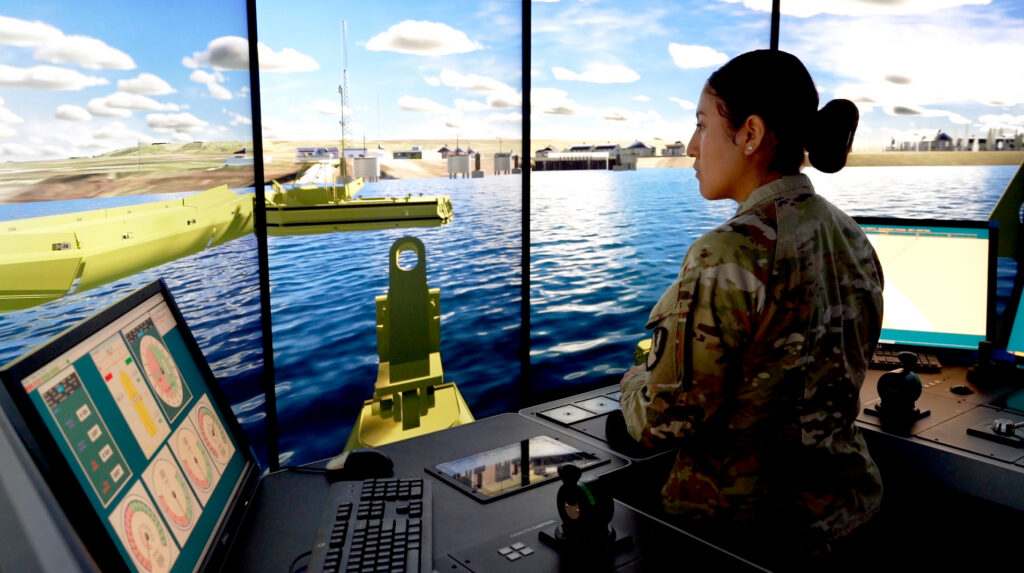
Simulation is about much more than teaching someone how to steer a vehicle. It also develops communication, teamwork and decision-making under stressful conditions.
Entire military convoys can train together in virtual environments, practising navigation, convoy procedures and reactions to unexpected threats without leaving their training facility.
Another major advantage is cost efficiency. Fuel consumption, maintenance costs and wear on expensive military vehicles are dramatically reduced when a portion of training takes place virtually.
Simulation also allows instructors to recreate rare or dangerous situations repeatedly, ensuring personnel are prepared for events they may only encounter once during active service.
Looking Towards the Future
The future of military training simulation vehicles is closely tied to advances in artificial intelligence, virtual reality and digital twin technology. As these systems become even more realistic, military personnel will be able to train in increasingly complex environments that closely mirror real-world operations.
Artificial intelligence is expected to create smarter virtual opponents and more dynamic battlefield scenarios, while improved networking will allow forces from different locations to train together in shared digital environments.
Although no simulator can completely replace real-world experience, these technologies continue to bridge the gap between classroom learning and operational deployment. As military vehicles become more advanced, simulation will remain one of the most valuable tools for preparing the next generation of military drivers.