Disaster Relief Vehicles on Land, Air and Water
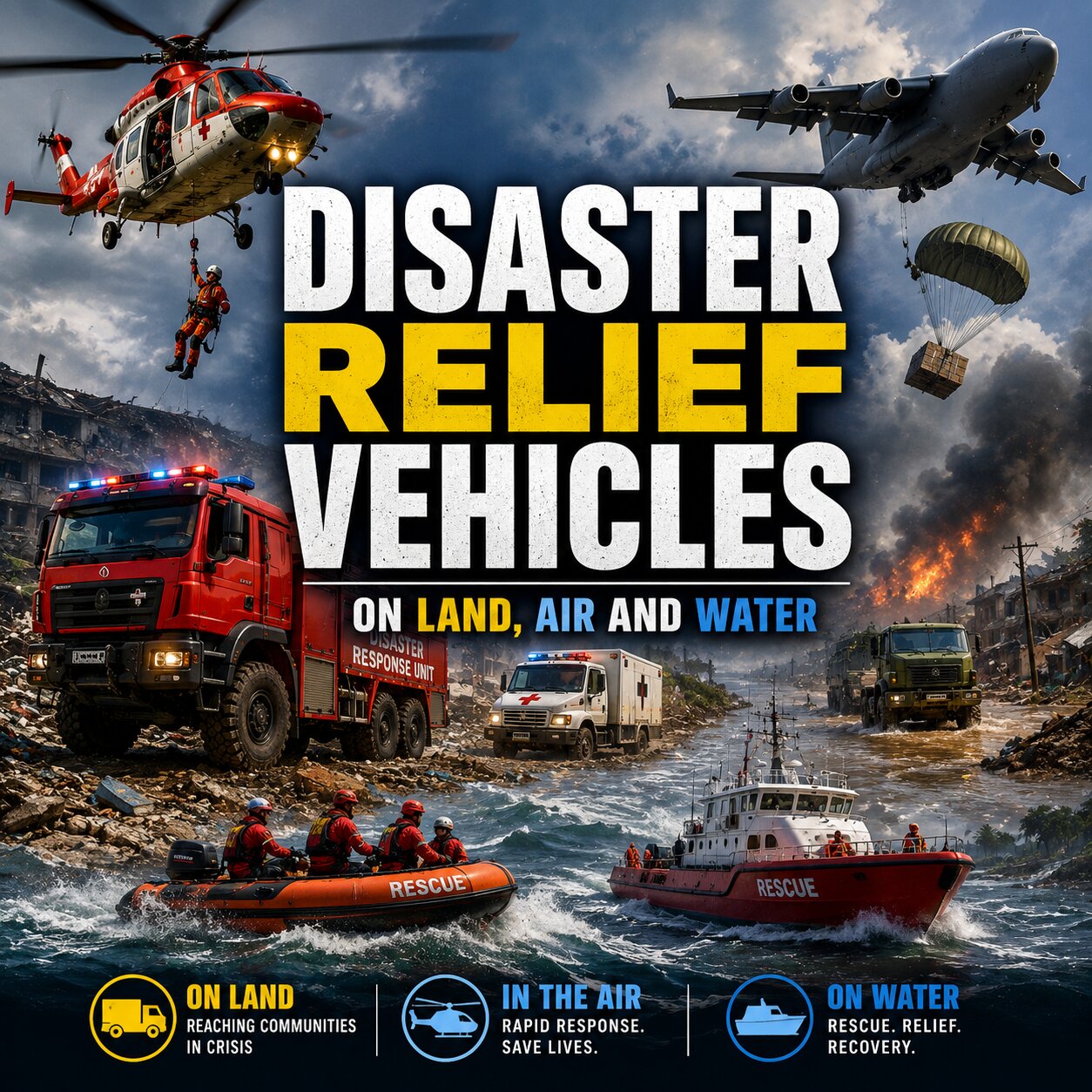
Disaster relief vehicles play a critical role when communities face floods, fires, storms, earthquakes, industrial accidents, and humanitarian emergencies. These specialised emergency vehicles are designed to transport rescue teams, deliver supplies, evacuate civilians, and support recovery operations across difficult environments on land, in the air, and on water.
As disasters become more severe and unpredictable around the world, disaster relief vehicles continue evolving with advanced technology, improved mobility, and specialised equipment. From heavy rescue trucks and amphibious craft to helicopters and emergency response ships, these vehicles help save lives when every second counts.
For emergency services, humanitarian organisations, military support units, and governments, disaster relief vehicles form the backbone of coordinated rescue and recovery operations.
Land-based disaster relief vehicles
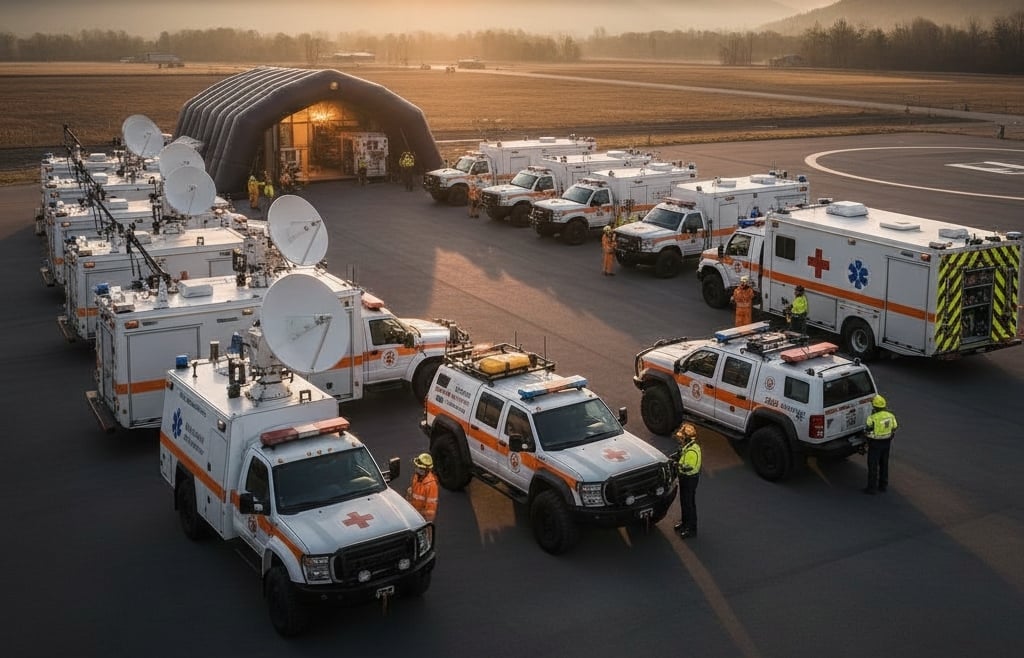
Land-based disaster relief vehicles are often the first response units deployed during emergencies. These vehicles must handle damaged roads, unstable terrain, debris, and severe weather conditions while transporting personnel and equipment safely.
Heavy rescue trucks are among the most important vehicles used in disaster zones. They carry hydraulic rescue tools, generators, communication systems, medical supplies, and specialised extraction equipment. Many are designed with reinforced suspension systems and off-road capabilities to operate in harsh conditions.
Ambulances and mobile medical units also play a major role in disaster response. Some large emergency trucks can function as temporary field hospitals, allowing paramedics and doctors to treat injured civilians directly in affected areas.
Military-style transport trucks are commonly used to deliver food, water, fuel, and emergency supplies. Their high ground clearance and rugged drivetrains make them suitable for flooded streets, muddy terrain, and collapsed infrastructure.
Modern disaster relief vehicles on land increasingly include drone deployment systems, satellite communication technology, and thermal imaging tools to improve rescue coordination and locate survivors more effectively.
Air disaster relief vehicles and rapid response
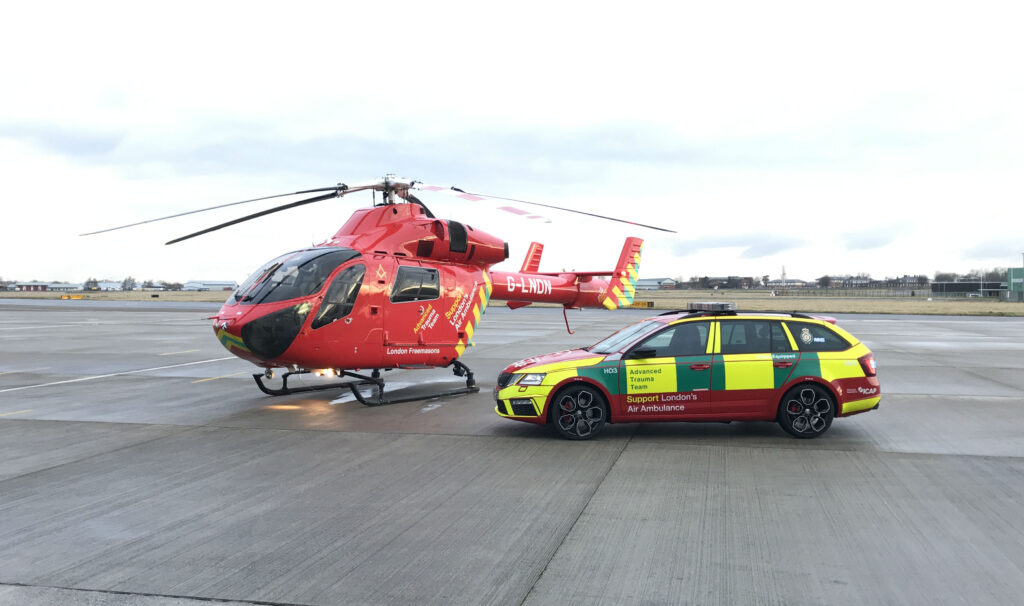
Air support is essential when roads become inaccessible or when rescue teams must reach remote or isolated areas quickly. Helicopters and specialised aircraft provide fast deployment during critical rescue operations.
Rescue helicopters are among the most recognisable disaster relief vehicles in the world. They transport injured civilians, deliver medical personnel, and perform aerial evacuations from rooftops, mountains, forests, and flood zones. Many feature winch systems that allow rescue crews to lift survivors directly from dangerous environments.
Cargo aircraft also play an important role during large-scale humanitarian disasters. These aircraft transport emergency supplies, temporary shelters, vehicles, and rescue teams across long distances in short periods of time.
Some air emergency units specialise in firefighting operations. Water-bombing aircraft and firefighting helicopters help control wildfires threatening communities and infrastructure. Their rapid deployment can significantly reduce the spread of fires during dry seasons.
Key advantages of air disaster relief vehicles include:
- Rapid deployment to inaccessible areas
- Aerial search and rescue capabilities
- Emergency medical evacuation support
- Fast transportation of relief supplies
- Improved disaster monitoring from above
As aviation technology improves, newer rescue aircraft now feature advanced navigation systems, night-vision support, thermal imaging, and enhanced weather monitoring systems for safer operations during extreme conditions.
Water-based disaster relief vehicles
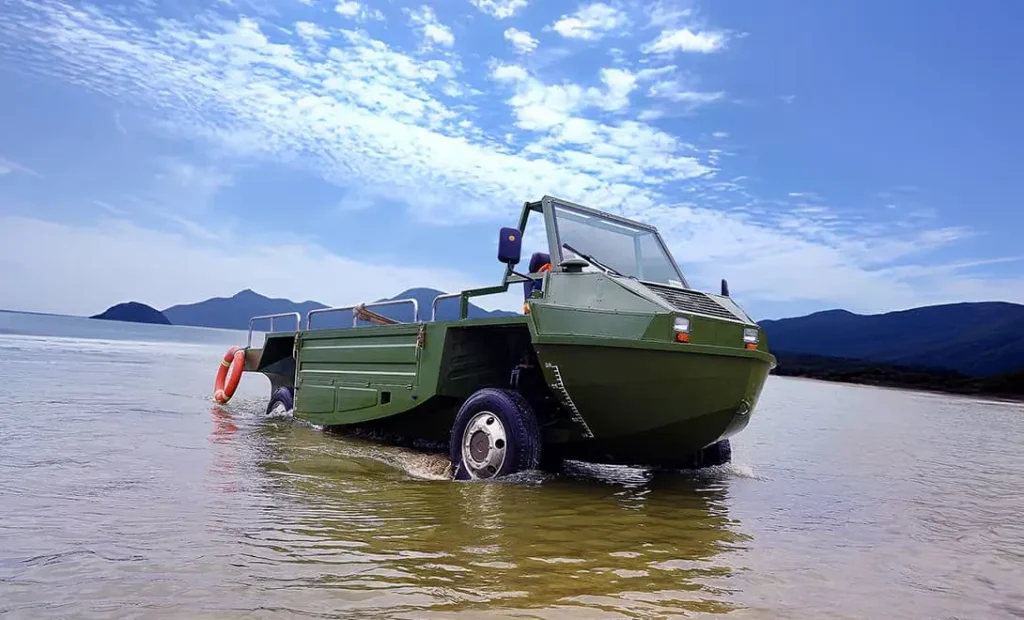
Water rescue operations require specialised disaster relief vehicles capable of operating during floods, tsunamis, hurricanes, and maritime emergencies. These vehicles are critical when communities become isolated by rising water levels or coastal destruction.
Rescue boats are commonly deployed during flooding emergencies. Inflatable rescue boats, rigid-hull vessels, and jet boats help emergency teams evacuate civilians trapped by floodwaters. Their shallow-water capabilities allow them to navigate streets and urban areas transformed into waterways.
Large rescue ships and humanitarian support vessels provide mobile command centres during maritime disasters. These vessels often carry medical facilities, helicopters, emergency housing supplies, and communication systems for extended operations.
Amphibious vehicles have become increasingly valuable in modern disaster response. These specialised machines can travel on both land and water, making them highly effective in flooded regions where roads are partially submerged.
Coast guard and naval support vessels also contribute heavily during international disaster response efforts. They transport rescue crews, deliver humanitarian aid, and support long-term recovery operations after major storms and tsunamis.
With climate change contributing to stronger storms and rising sea levels, water-based disaster relief vehicles continue becoming more important in global emergency response planning.
The future of disaster relief vehicles
The future of disaster relief vehicles will likely focus on faster response times, smarter technology, and improved adaptability across multiple environments. Modern emergency response systems increasingly rely on vehicles that can operate in dangerous and unpredictable conditions while supporting rescue teams with advanced equipment.
Electric and hybrid emergency vehicles are already beginning to appear in some rescue fleets, offering quieter operations and reduced fuel dependency. Autonomous support systems, drones, AI-assisted navigation, and advanced communication platforms are also shaping the next generation of disaster response technology.
As disasters become more complex worldwide, disaster relief vehicles will remain essential tools for saving lives, protecting communities, and helping recovery teams respond effectively across land, air, and water environments.