
How Motorcycle Suspension Telemetry Improves Racing Performance
Every bump, corner and braking zone places different demands on a racing motorcycle. Motorcycle suspension telemetry allows engineers to understand how the front forks and rear shock respond to these constantly changing conditions. Rather than relying exclusively on rider feedback, racing teams can examine detailed measurements to identify handling problems and develop more effective suspension settings. This combination of technology and mechanical expertise can provide a valuable competitive advantage.
What Is Motorcycle Suspension Telemetry?
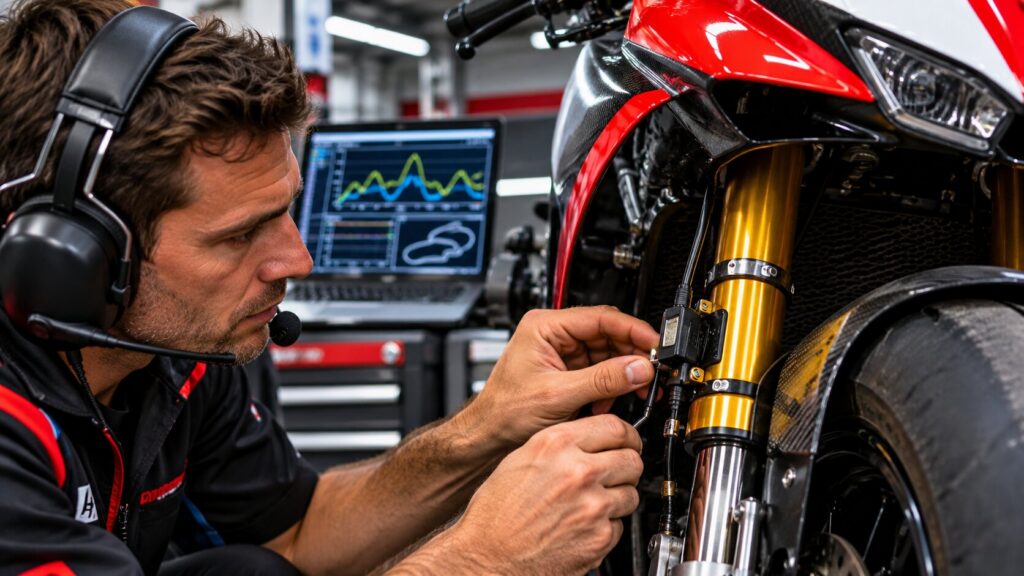
Motorcycle suspension telemetry involves collecting and analysing information about suspension movement while a motorcycle is operating. Sensors measure how far the suspension compresses and extends, providing engineers with a detailed record of its behaviour. This information helps reveal characteristics that might otherwise remain difficult to identify through visual observation or rider feedback alone.
Although telemetry technically refers to transmitting measurements to another location, the term is commonly associated with racing data acquisition. Depending on the championship regulations and equipment, teams may record information onboard for analysis after a session rather than transmitting it live. Engineers can then compare suspension behaviour across different laps and track locations.
How Motorcycle Suspension Telemetry Works
Linear displacement sensors, often called potentiometers, can be installed alongside the front forks and rear suspension assembly. These devices produce electrical signals that change as the suspension moves through its available travel. A data logger records these measurements alongside information from other motorcycle systems.
According to the technical resources available from Data for Motorcycles, suspension position and movement speed provide useful information for evaluating spring settings and damping characteristics. Combining this information with GPS measurements allows engineers to associate suspension behaviour with specific sections of a racing circuit. Accurate sensor calibration remains essential for meaningful comparisons.
Motorcycle suspension telemetry becomes particularly valuable when engineers examine several measurements together. These can include:
- Front fork compression and extension.
- Rear shock displacement.
- Suspension movement velocity.
- Motorcycle speed and lean angle.
- Throttle position and braking pressure.
- GPS position and lap times.
Together, these measurements help engineers understand how suspension behaviour changes throughout a lap. They can also investigate whether particular movements coincide with rider inputs, surface irregularities or changes in motorcycle speed. This provides a more comprehensive understanding of handling performance.
1. Improving Braking Stability
Heavy braking transfers load towards the front of a motorcycle, causing the front suspension to compress and reducing the load carried by the rear tyre. Excessive compression can leave insufficient suspension travel available for absorbing surface irregularities. In extreme circumstances, the front suspension may reach its mechanical travel limit.
Motorcycle suspension telemetry helps engineers identify where excessive compression occurs and whether it corresponds with rider complaints. They can investigate spring rates, preload and compression damping before determining which adjustments may help. The objective is to maintain predictable braking behaviour without unnecessarily compromising suspension compliance.
2. Optimising Cornering Performance
A racing motorcycle must remain responsive while leaning through corners and travelling across uneven surfaces. Suspension settings influence chassis movement, steering geometry and the ability of the tyres to maintain effective contact with the track. An unsuitable setup can make the motorcycle feel unpredictable during corner entry, mid-corner transitions or acceleration towards the exit.
Through motorcycle suspension telemetry, engineers can examine suspension movement throughout each stage of a corner. Comparing these measurements with rider feedback helps identify whether handling concerns are associated with suspension behaviour or another component. Our guide to motorcycle steering dampers explores another technology that contributes to motorcycle stability.
3. Supporting Rear Tyre Traction
Accelerating out of a corner places substantial demands on the rear tyre and suspension. The rear suspension’s response depends on load transfer, chassis geometry, acceleration forces and the characteristics of its springs and dampers. Excessive movement or inadequate compliance can make delivering power smoothly more difficult.
Engineers use motorcycle suspension telemetry to investigate how the rear suspension responds when the rider applies the throttle. Combining suspension measurements with wheel speed and throttle data can help identify potential traction-related problems. However, suspension measurements alone cannot determine exactly how much grip a tyre has available.
4. Managing Tyre Wear Throughout a Race
Racing tyres experience repeated changes in loading, temperature and surface contact throughout an event. Suspension settings can influence these conditions by affecting how consistently the motorcycle responds to bumps, braking and acceleration. A poorly matched setup may contribute to undesirable tyre wear, although tyre pressure, compound selection and riding technique also play important roles.
Motorcycle suspension telemetry allows teams to compare suspension behaviour during the early and later stages of a race simulation. Engineers can assess whether handling characteristics change as the tyres wear and fuel levels decrease. These observations help teams develop setups that prioritise consistency rather than concentrating exclusively on the fastest individual lap.
5. Adapting Motorcycle Setup to Different Circuits
No two racing circuits place identical demands on motorcycle suspension. Some feature smooth surfaces and flowing corners, while others contain aggressive braking zones, elevation changes and uneven asphalt. A suspension configuration that performs exceptionally well at one venue may require substantial adjustments elsewhere.
Historical motorcycle suspension telemetry gives racing teams a useful starting point when preparing for familiar circuits. Engineers can compare previous setups with current conditions and evaluate whether changes to the motorcycle require a different approach. Advances in motorcycle aerodynamics can also influence suspension requirements by changing the aerodynamic forces acting on the machine.
Why Rider Feedback Remains Essential
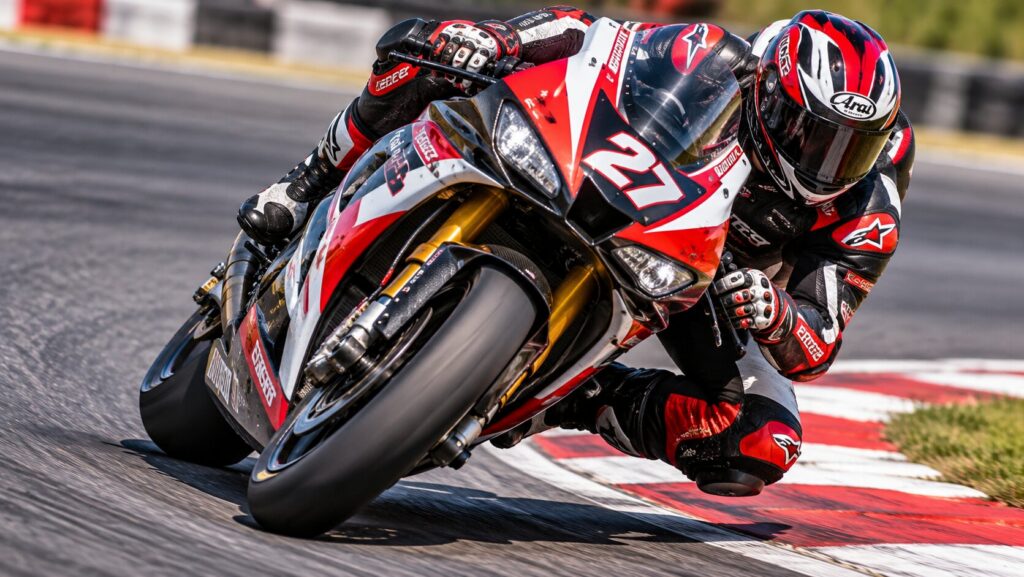
Despite its technical sophistication, motorcycle suspension telemetry cannot completely replace the experience of a professional rider. Sensors can reveal how the motorcycle moves, but they cannot directly measure the rider’s confidence or comfort with a particular setup. Two riders may prefer considerably different suspension characteristics despite achieving similar lap times.
The strongest engineering approach combines objective measurements with subjective rider feedback. Teams can investigate specific concerns, implement controlled adjustments and evaluate the results during subsequent sessions. This process helps distinguish genuine improvements from changes that merely produce different handling sensations.
The Future of Motorcycle Suspension Development
As sensor technology and data analysis software improve, racing engineers gain additional opportunities to investigate motorcycle behaviour. More sophisticated analytical tools can help identify recurring patterns across multiple sessions and reduce the time required to evaluate setup changes. However, championship regulations continue to determine which technologies teams may use during competition.
Motorcycle suspension telemetry demonstrates how mechanical engineering and data analysis work together to support modern racing performance. Its greatest value lies in helping teams make informed decisions that improve stability, consistency and rider confidence. Explore our bike racing articles to discover more technologies shaping competitive motorcycle racing.