
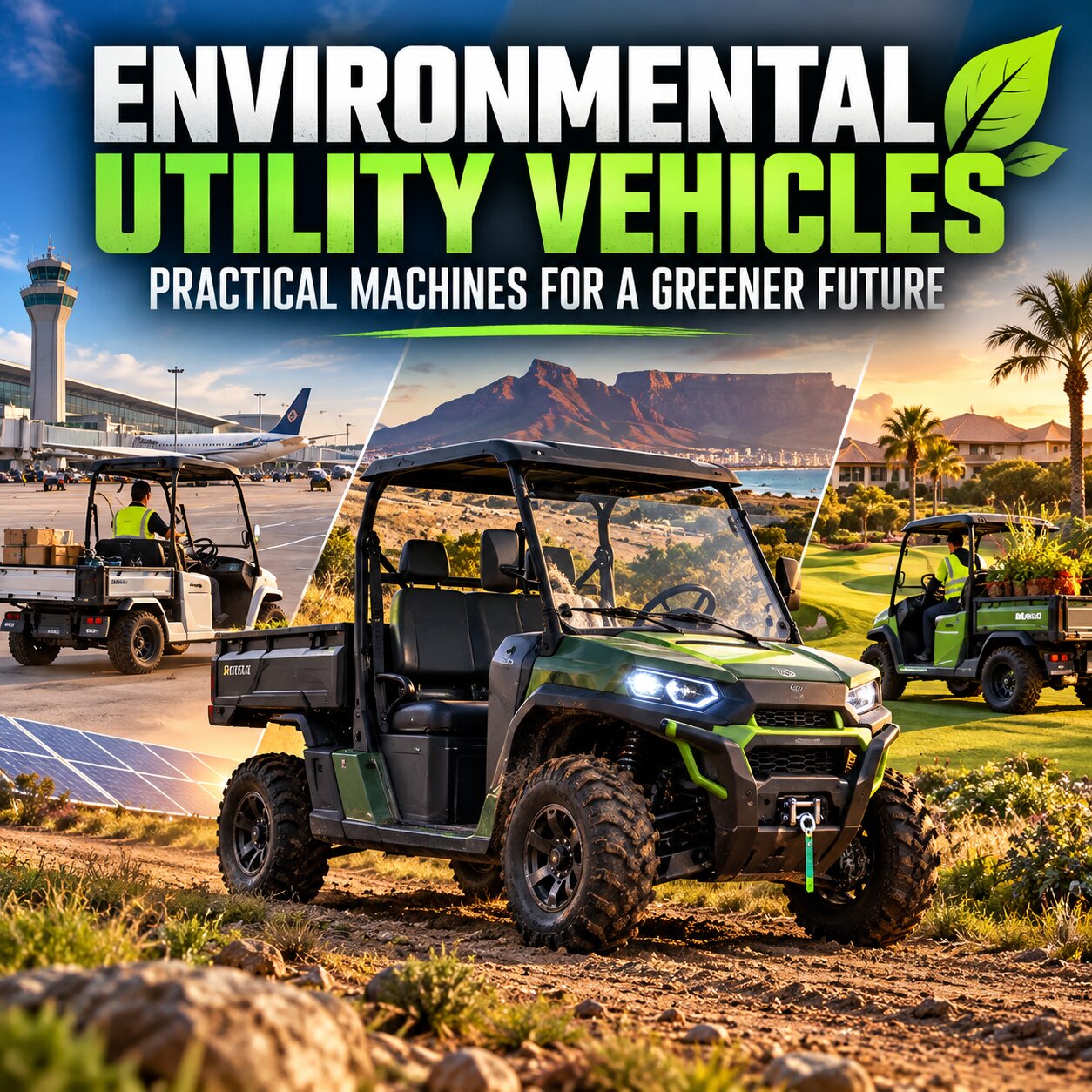
Environmental Utility Vehicles: Practical Machines for a Greener Future
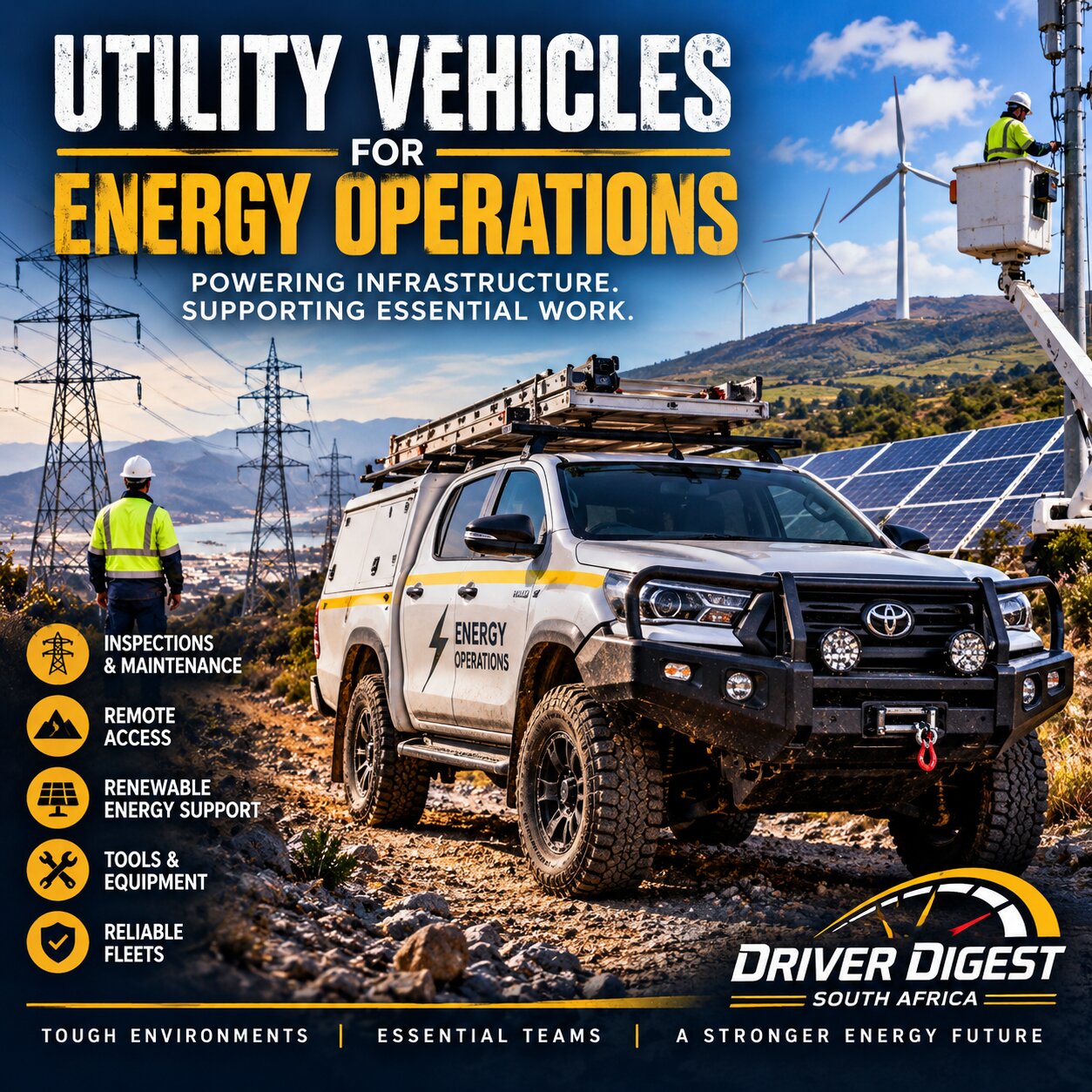
Utility vehicles are designed to work. Whether transporting equipment around a farm, moving maintenance teams across a large facility or carrying supplies through difficult terrain, these machines prioritise practicality over luxury. However, as organisations look for ways to reduce fuel consumption and emissions, a new generation of environmental utility vehicles is becoming increasingly important.
Electric drivetrains, alternative fuels, improved battery technology and more efficient vehicle designs are changing what utility vehicles can accomplish without relying entirely on conventional petrol or diesel engines.
For South African businesses, farms, municipalities and specialised facilities, environmental utility vehicles could become particularly useful where vehicles repeatedly travel relatively short distances during the working day.
What Are Environmental Utility Vehicles?
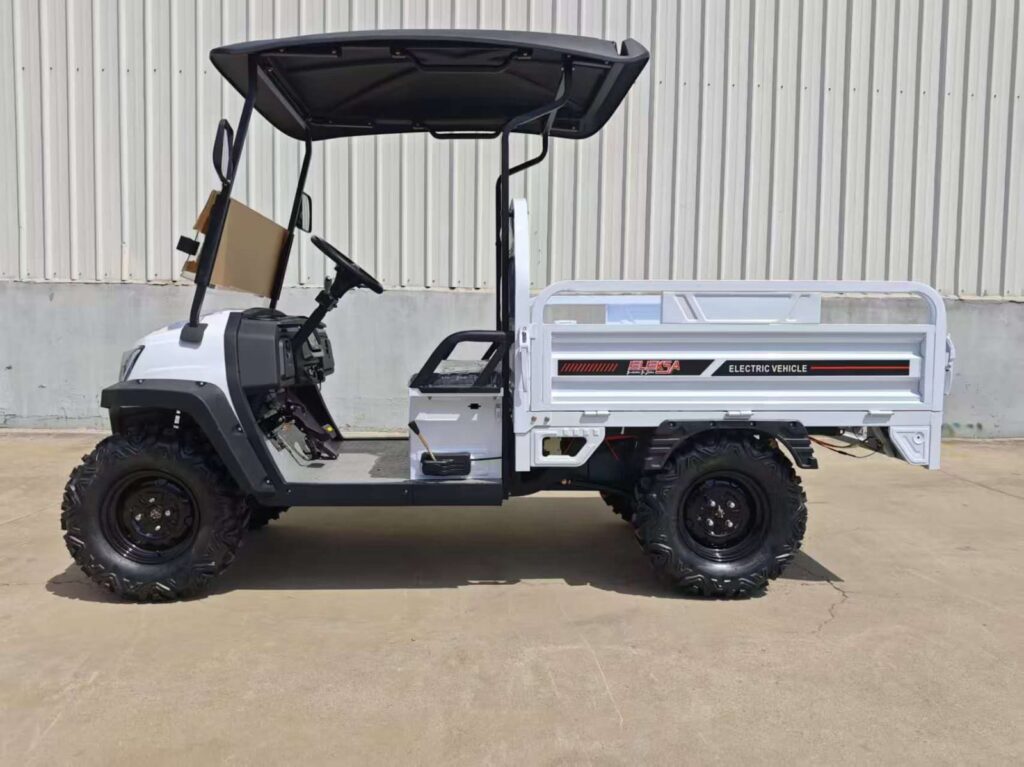
The term environmental utility vehicles can cover several different vehicle types rather than one specific class.
At their simplest, they are working vehicles designed to perform practical transportation or operational tasks while reducing their environmental impact. Depending on the application, this could involve an electric powertrain, hybrid technology, alternative fuels or engineering improvements that reduce energy consumption.
They can range from compact vehicles carrying two workers and their tools to larger machines designed to transport equipment or materials.
The important distinction is their purpose. These aren’t necessarily electric passenger cars converted into work vehicles. Environmental utility vehicles are generally expected to perform a job first while incorporating technology that makes their operation cleaner or more efficient.
Where Can They Be Used?
There are many environments where environmental utility vehicles could make sense.
Large facilities often have maintenance teams travelling continuously between buildings. Airports have enormous operational areas requiring staff and equipment transportation. Hotels, resorts and golf courses may use utility vehicles for groundskeeping, luggage transport and maintenance.
Other potential applications include:
- Farms, warehouses, factories, airports, nature reserves, mines, construction sites, resorts, municipal facilities and large commercial properties.
Some applications are particularly well suited to electrification because the vehicles operate within a defined area.
A utility vehicle working around a resort, warehouse complex or airport, for example, may return to the same operational base several times throughout the day. That creates opportunities for scheduled charging without necessarily interfering with its duties.
Electric Utility Vehicles
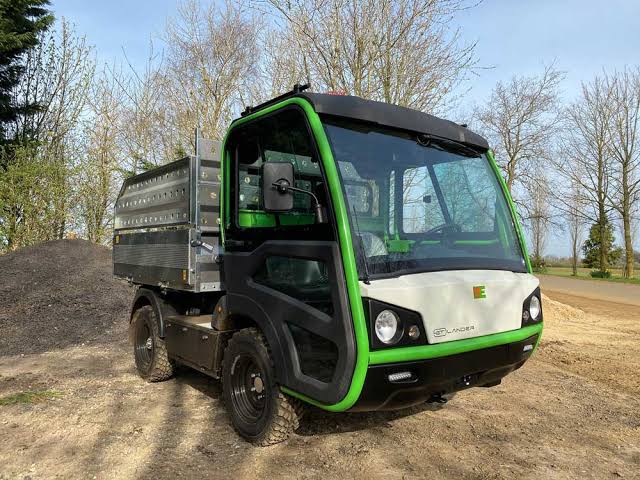
Battery-electric technology is one of the most obvious developments influencing environmental utility vehicles.
Electric motors offer several characteristics that can be useful in working environments. They produce immediate torque, have fewer moving drivetrain components than conventional internal-combustion engines and produce no tailpipe emissions during operation.
They can also be significantly quieter.
That matters in locations where noise needs to be controlled. A utility vehicle operating around guests at a resort, workers inside a warehouse or animals within a conservation environment can potentially perform its duties without the constant engine noise associated with traditional vehicles.
However, electric doesn’t automatically mean suitable for every job.
Range, charging infrastructure, battery capacity, payload requirements and operating conditions all need to be considered before replacing an existing fleet.
The Importance of Choosing the Right Vehicle
One of the biggest mistakes organisations can make is choosing environmental utility vehicles simply because they want to demonstrate that they are becoming greener.
The vehicle still needs to work.
A farm vehicle might need substantial ground clearance and off-road capability. An airport maintenance vehicle may need space for specialised equipment. A warehouse vehicle could prioritise manoeuvrability, while a municipal vehicle might need sufficient payload capacity to carry tools and materials throughout an entire shift.
Environmental performance therefore needs to form part of the purchasing decision rather than becoming the only consideration.
Operators should examine how far vehicles travel each day, what they carry, where they operate and how frequently they can return to charging or refuelling facilities.
Those answers can determine which technology makes the most practical sense.
Environmental Utility Vehicles in South Africa
South Africa presents an interesting environment for these vehicles because the country contains such a wide variety of industries and operating conditions.
Agriculture, tourism, mining, manufacturing, logistics and conservation all rely on vehicles capable of transporting people and equipment.
Electric environmental utility vehicles could prove particularly useful for controlled environments where daily routes are predictable. Solar installations could potentially complement charging infrastructure at facilities with sufficient capacity, creating another connection between transportation and renewable-energy investment.
There are nevertheless practical challenges.
Initial purchase costs, charging infrastructure, battery replacement expenses and access to specialised servicing all need consideration. Vehicles operating in remote areas also require dependable support, particularly when they perform essential daily duties.
For fleet operators, the financial calculation should therefore consider the complete operating life of the vehicle rather than focusing exclusively on its purchase price.
More Than Just Lower Emissions
The environmental benefits of cleaner utility vehicles extend beyond reducing exhaust emissions.
Quieter vehicles can reduce noise pollution. Efficient fleet management can decrease unnecessary journeys. Regenerative braking can recover energy during operation, while modern telematics can help organisations understand how their vehicles are actually being used.
There is also an opportunity to reconsider the size of the vehicle required for a particular job.
If two maintenance workers only need to transport themselves and a small collection of tools across a facility, using a large conventional bakkie for every journey may be unnecessary. A smaller environmental utility vehicle could perform the same task while consuming considerably less energy.
Sustainability sometimes comes from selecting the right tool rather than simply changing the fuel powering the existing one.
A Different Future for Working Vehicles
Environmental utility vehicles aren’t likely to replace every petrol- or diesel-powered working vehicle overnight.
Heavy workloads, remote locations and demanding terrain will continue to influence which technologies are practical. Battery development, charging availability and vehicle costs will also determine how quickly businesses adopt alternatives.
But utility vehicles represent an interesting opportunity for cleaner transportation because so many of them operate within predictable environments.
Instead of travelling hundreds of kilometres between destinations, many spend their lives moving repeatedly around farms, airports, resorts, factories and industrial facilities.
Those repetitive journeys make them excellent candidates for new drivetrain technologies.
As manufacturers continue developing tougher batteries, more capable electric motors and vehicles specifically engineered for professional applications, environmental utility vehicles could gradually become a familiar sight across South Africa.
The future of motoring isn’t only about the cars we drive to work.
It’s also about changing the vehicles that do the work.





My experience with these machines showed a significant drop in operating costs compared to my previous heavy equipment. I noticed that maintenance schedules are much less frequent than I initially anticipated.